


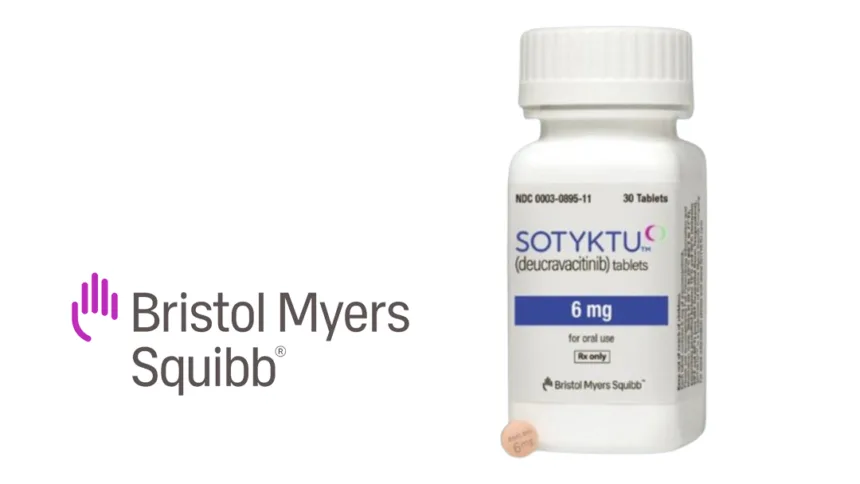
Bristol‑Myers Squibb Co. (BMS) (NYSE: BMY) announced topline results from POETYK SLE‑1 and POETYK SLE‑2, two pivotal Phase 3 trials evaluating the efficacy and safety of Sotyktu (deucravacitinib), an oral selective tyrosine kinase 2 (TYK2) inhibitor, in adults with moderate‑to‑severe systemic lupus erythematosus (SLE). POETYK SLE‑1 met its SRI‑4 primary endpoint along with several key secondary endpoints, while POETYK SLE‑2 did not meet the primary endpoint despite a consistent level of response.
Clinical Milestone
| Item | Detail |
|---|---|
| Sponsor | Bristol‑Myers Squibb Co. (NYSE: BMY) |
| Product | Sotyktu (deucravacitinib) – oral selective TYK2 inhibitor |
| Trials | POETYK SLE‑1 and POETYK SLE‑2 (pivotal Phase 3) |
| Population | Adults with moderate‑to‑severe systemic lupus erythematosus (SLE) |
| Primary Endpoint | SRI‑4 response – met in SLE‑1; not met in SLE‑2 |
| Key Secondary Endpoints (SLE‑1) | Statistically significant reduction in disease activity by BICLA |
| Safety | Well‑tolerated; consistent with established profile in both trials |
| Announcement Date | 26 Nov 2026 |
| Next Steps | Full data presentation and regulatory strategy – not disclosed |
Drug Profile & Mechanism of Action
- Molecule: Deucravacitinib, an oral, selective tyrosine kinase 2 (TYK2) inhibitor
- Selectivity: Allosteric TYK2 blockade preferentially inhibits signaling through the type I interferon receptor and IL‑12/IL‑23 – pathways central to SLE pathogenesis – over broader JAK family kinases
- Current Approvals: Approved in the United States and numerous countries worldwide for adults with moderate‑to‑severe plaque psoriasis and adults with active psoriatic arthritis
- Potential Expansion: Positive autoimmune momentum in dermatology/rheumatology now extends to a pivotal lupus program
Clinical Evidence – POETYK SLE Phase 3 Trials
| Endpoint | POETYK SLE‑1 | POETYK SLE‑2 | Interpretation |
|---|---|---|---|
| SRI‑4 (Primary) | Met | Not met | Mixed topline outcome across the two pivotal trials |
| BICLA Disease Activity | Statistically significant reduction | Consistent response level reported vs. SLE‑1 | Supports activity signal in SLE‑1 |
| Other Key Secondary Endpoints | Several met | – | Statistical significance details not disclosed |
| Safety & Tolerability | Well‑tolerated; consistent with established profile | Well‑tolerated; consistent with established profile | No new safety signals reported |
In POETYK SLE‑1, deucravacitinib achieved its SRI‑4 primary endpoint and several key secondary endpoints, including a statistically significant reduction in disease activity as measured by BICLA. In POETYK SLE‑2, Sotyktu demonstrated a level of response consistent with SLE‑1; however, the SRI‑4 primary endpoint was not met. Across both trials, Sotyktu was well‑tolerated, with safety consistent with its established profile.
Market Impact & Outlook
- Lupus Treatment Landscape: SLE remains an area of high unmet need with limited approved targeted therapies; an oral TYK2 inhibitor would represent a differentiated, non‑biologic option if ultimately approved.
- Split Regulatory Picture: Mixed pivotal results complicate the path forward – regulatory discussions will likely hinge on the totality of data across POETYK SLE‑1, SLE‑2, and the broader program.
- Franchise Value: Deucravacitinib already anchors BMS’s immunology portfolio in plaque psoriasis and psoriatic arthritis; an SLE expansion would materially broaden its addressable market.
- Data & Filing Timelines: Full datasets, potential additional trials, and submission plans – not disclosed in the topline announcement.
Forward‑Looking Statements
This brief contains forward‑looking statements regarding clinical development, regulatory timelines, and commercial expectations for deucravacitinib in systemic lupus erythematosus. Actual results may differ materially due to risks including final analysis of trial data, regulatory review outcomes, and competitive dynamics in the autoimmune and lupus treatment markets.-Fineline Info & Tech