



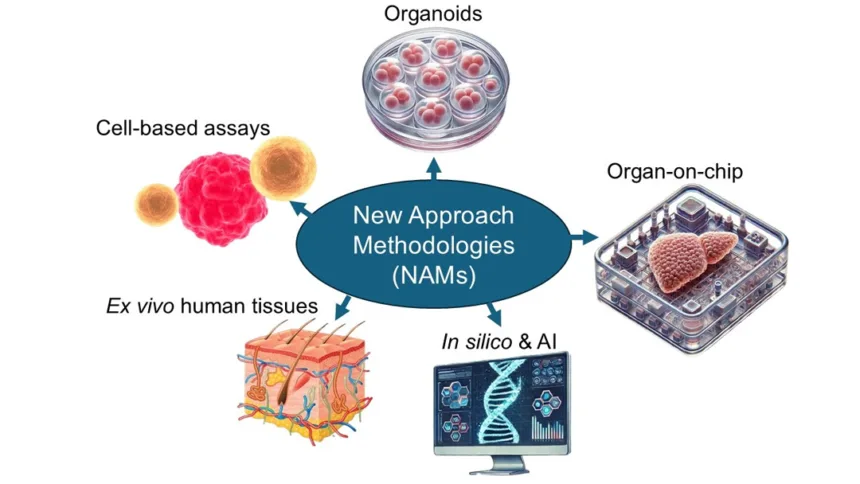
The Center for Drug Evaluation (CDE) of China’s National Medical Products Administration (NMPA) issued the Pilot Plan for Promoting the Research and Application of New Approach Methodologies (the “Pioneer Plan“), which took effect on the date of release. The plan is designed to promote the research, validation, and application of New Approach Methodologies (NAMs) in non‑clinical drug evaluation, with the aim of reducing, refining, and replacing traditional animal testing.
Policy Snapshot
| Item | Detail |
|---|---|
| Issuing Agency | CDE of NMPA (China) |
| Document | Pilot Plan for Promoting the Research and Application of New Approach Methodologies (“Pioneer Plan”) |
| Issue Date | 29 Sep 2026 |
| Effective Date | Date of release |
| Recruitment Period | 5 years |
| Participation Basis | Voluntary |
| Eligible Applicants | Drug registration applicants and/or NAM development institutions |
| Application Route | Regulatory communication channels – request for a Class I communication meeting |
| Public Notice | Projects tentatively approved after evaluation are publicly announced for a 5‑working‑day notice period |
Plan Highlights & Mechanism
- Core Objective: Advance the research, validation, and application of NAMs in non‑clinical drug evaluation, aligned with the internationally recognized “3Rs” principle – to reduce, refine, and replace traditional animal testing.
- Regulatory Intent: Allow applicants to obtain data that is equally or more predictive of human responses – and to do so faster – thereby informing regulatory decisions.
- NAM Context: New Approach Methodologies encompass alternatives to conventional animal studies, such as organoid, organ‑on‑a‑chip, and computational modeling approaches, reflecting the global shift toward human‑biology‑based non‑clinical evaluation.
- Dual Applicant Track: The plan is open both to drug registration applicants, who seek to use NAM data in support of registration, and to NAM development institutions, which may apply for methodological validation.
- One Scenario per Application: Each application may cover only one application scenario; as data accumulates, applicants may submit new applications to expand into additional suitable scenarios.
Inclusion Criteria
An application to join the pilot may be submitted if the proposed research meets either of the following conditions:
| Condition | Description |
|---|---|
| (1) Registration‑Supporting NAM Data | NAMs are planned to be used or have already been applied in the non‑clinical evaluation of drugs, with relevant research data serving as supporting data for a drug registration application |
| (2) Methodological Validation | NAM development institutions apply for validation of the methodology itself |
Market Impact & Outlook
- Regulatory Science Milestone: The Pioneer Plan marks a formal CDE pathway for NAM‑generated data to enter China’s drug evaluation framework, signaling regulatory openness to human‑relevant, animal‑free testing technologies.
- Innovation Efficiency: By creating a structured pilot route – Class I communication meeting, evaluation, tentative approval, and 5‑working‑day public notice – the plan offers applicants a clearer path to faster generation of data predictive of human responses.
- Industry Readiness: Pharmaceutical sponsors investing in organoids, organ‑on‑a‑chip, and computational toxicology platforms are positioned to leverage the pilot both for registration support and methodological validation partnerships.
- Global Alignment: The initiative tracks the worldwide regulatory momentum toward replacing animal testing, potentially improving the international acceptability of China‑generated non‑clinical data.
- Five‑Year Horizon: With a 5‑year recruitment period and scenario‑by‑scenario expansion, the pilot is designed to accumulate evidence progressively rather than through a single blanket adoption.
Forward‑Looking Statements
This brief contains forward‑looking statements regarding the implementation of the CDE’s Pioneer Plan, including the research, validation, and application of New Approach Methodologies in non‑clinical drug evaluation, and the outcome of pilot applications. Actual results may differ due to risks including evaluation outcomes, methodological validation progress, and evolving regulatory requirements.-Fineline Info & Tech