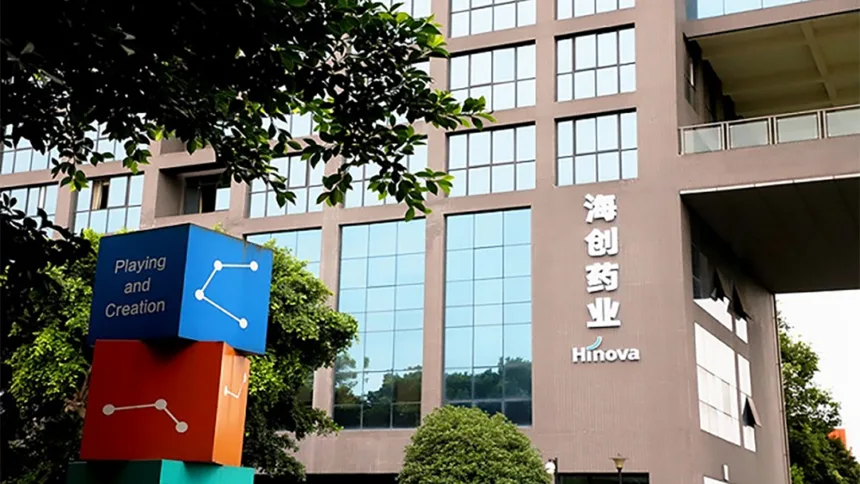
Hinova Pharmaceuticals Inc. (SHA: 688302) announced that Phase IIa clinical data for HP515 tablets, its proprietary oral THR‑β (thyroid hormone receptor beta) agonist, have been accepted as a Late‑Breaking Abstract for poster presentation at the 2026 Annual Meeting of the American Association for the Study of Liver Diseases (AASLD) – one of the most selective presentation categories at the world’s premier hepatology conference, reserved for research of major clinical significance obtained after the standard abstract deadline.
Phase I data presented as poster at EASL Congress 2026
Competitive Status
No THR‑β agonist approved for MASH in China to date
Significance
Late‑Breaking Abstract status signals high academic recognition of clinical value; enhances international scientific profile and partnership visibility
Drug Profile & Mechanism of Action
Molecule:HP515 – a highly selective, high‑potency oral THR‑β agonist, independently developed by Hinova Pharmaceuticals
Target:Thyroid hormone receptor beta (THR‑β) – the predominant thyroid receptor subtype in hepatocytes, which regulates hepatic lipid metabolism without triggering the cardiac (THR‑α) side effects associated with non‑selective thyroid hormone analogues
Mechanism: Selectively activates THR‑β in liver cells, enhancing hepatocyte lipid metabolic activity and reducing intrahepatic lipid content, thereby addressing the steatotic and inflammatory drivers of MASH progression
Differentiation: High THR‑β selectivity minimizes the cardiovascular and bone‑related safety concerns historically associated with thyroid hormone‑based therapies, a key limitation that derailed earlier‑generation THR agonists in metabolic liver disease
Development Stage:Phase IIa complete with positive primary and key secondary endpoints achieved; dual IND approvals from China NMPA and U.S. FDA enabling international development
Primary Efficacy Endpoint: Percentage change from baseline in liver fat content (LFC) at Week 12, measured by MRI‑PDFF (magnetic resonance imaging–proton density fat fraction), independently assessed by a third‑party evaluator
Key Efficacy Results
Endpoint
HP515 (All Dose Groups)
Placebo
Statistical Significance
Liver Fat Content Reduction at Week 12
>50 % mean reduction from baseline
3.5 % reduction
P < 0.001
LDL‑C
Significantly improved
–
P < 0.001
ApoB
Significantly improved
–
P < 0.001
Non‑HDL‑C
Significantly improved
–
P < 0.001
Total Cholesterol (TC)
Significantly improved
–
P < 0.001
Triglycerides (TG)
Significantly improved
–
P < 0.001
Small Dense LDL‑C (sd‑LDL‑C)
Significantly improved
–
P < 0.001
Safety Profile
Safety Parameter
Result
Overall Tolerability
Good
Serious Adverse Events (SAEs)
None
Drug‑Related AEs Leading to Discontinuation
None
Specific AE Details
Not disclosed in press release
The >50% liver fat reduction across all HP515 dose groups, coupled with broad and statistically significant improvements across the entire lipid panel (LDL‑C, ApoB, non‑HDL‑C, TC, TG, sd‑LDL‑C), demonstrates a robust dual hepatometabolic benefit – simultaneously reducing hepatic steatosis and improving systemic dyslipidemia, both of which are key drivers of cardiovascular morbidity and mortality in the MASH population. The absence of SAEs and treatment‑discontinuing AEs is particularly noteworthy given the safety concerns that have historically plagued thyroid receptor‑targeting therapies.
Clinical Context – MASH Disease Burden and Treatment Landscape
Parameter
Data
Global MASH Prevalence
3–5 % of general population
U.S. Adult MASH Prevalence
5.8 %
China MASH Patients (Projected 2030)
48.3 million
U.S. MASH Patients (Projected 2030)
27 million
MASLD Global Prevalence
6.3–45 % of adults; 10–30 % of MASLD patients have MASH
Asia MASLD Prevalence
>25 % (mid‑to‑upper range globally)
Metabolic dysfunction‑associated steatohepatitis (MASH) is the more severe, progressive subtype of MASLD (formerly NAFLD), characterized by hepatomegaly, hepatic steatosis, inflammation, and fibrosis – with potential progression to cirrhosis, hepatocellular carcinoma, and death. MASH prevalence tracks closely with the global epidemics of obesity, type 2 diabetes, and metabolic syndrome, driving rapid growth in the addressable patient population.
AASLD Late‑Breaking Abstract Prestige: The Late‑Breaking Abstract category at AASLD is specifically designed for important clinical data generated after the standard abstract submission deadline, with a highly competitive selection process. Acceptance signals that the international hepatology community recognizes HP515’s data as having major clinical significance – a credential that carries substantial weight in regulatory discussions, partnership negotiations, and investor evaluation.
THR‑β Agonist Class Opportunity: The THR‑β agonist class has emerged as one of the most promising novel approaches to MASH treatment, following the regulatory success of resmetirom (Rezdiffra, Madrigal Pharmaceuticals) – the first FDA‑approved MASH drug. HP515’s >50% liver fat reduction at 12 weeks and comprehensive lipid panel improvements position it competitively within this validated target class.
Cardiometabolic Differentiation: HP515’s simultaneous improvement of hepatic steatosis and systemic dyslipidemia (including the atherogenic markers sd‑LDL‑C and ApoB) addresses the cardiovascular risk burden that is the leading cause of death in MASH patients – a therapeutic benefit that extends beyond liver histology alone.
Dual‑Market Development Strategy: With IND approvals from both China NMPA and U.S. FDA, Hinova is positioned to pursue parallel clinical development in the two largest MASH markets, maximizing the asset’s global commercial potential.
International Academic Trajectory: The sequential presentation of HP515 data at EASL Congress 2026 (Phase I) and now AASLD 2026 (Phase IIa Late‑Breaking) demonstrates a systematic international academic strategy, building cumulative scientific evidence and visibility among the global hepatology community.
Partnership Catalyst: Late‑Breaking Abstract presentation at AASLD – attended by key opinion leaders, regulatory officials, and business development executives from major pharmaceutical companies – serves as a high‑visibility platform for potential licensing, co‑development, or partnership discussions, particularly for ex‑China commercialization rights.
Financial Impact: Hinova stated that the acceptance will not have a material impact on near‑term revenue or profitability, consistent with the early development stage. The strategic value lies in pipeline valuation, international credibility, and partnership optionality.
Forward‑Looking Statements This brief contains forward‑looking statements regarding the clinical development, academic recognition, and commercial potential of HP515 in MASH. Acceptance of a Late‑Breaking Abstract does not constitute regulatory approval or guarantee future clinical success. Actual outcomes may differ due to risks including Phase IIb/III trial results, regulatory decisions, competitive dynamics, partnership negotiations, and the inherent uncertainties of drug development in a rapidly evolving therapeutic area.-Fineline Info & Tech
Insight, China's Pharmaceutical Industry Fineline Info & Tech is a comprehensive global pharmaceutical database that spans the entire product lifecycle. Its mission is to equip professionals and executives across all sectors of the life sciences industry with a standardized data language, offering a holistic view of the Chinese pharmaceutical competitive landscape. Flcube.com furnishes critical data essential for informed decision-making, drawing on global industry news, policy insights, competitive intelligence, and advanced analytical tools.