


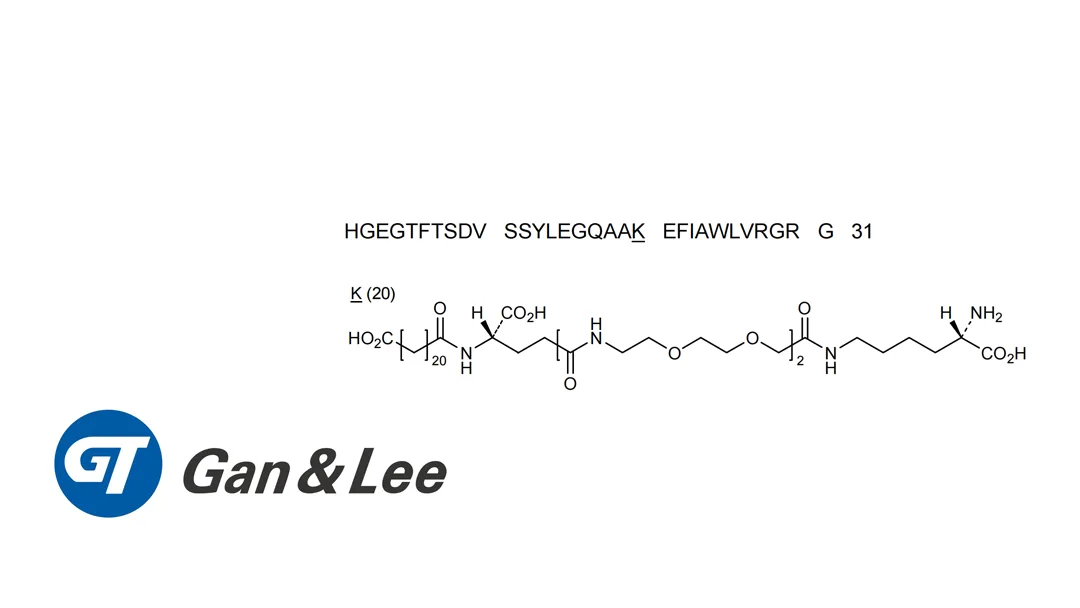
China-based Gan & Lee Pharmaceuticals (SHA: 603087) presented multiple Phase II clinical outcomes for its ultra-long-acting GLP-1 receptor agonist bofanglutide (GZR18) and once-weekly basal insulin analog GZR4 injection at the American Diabetes Association (ADA)’s 85th Scientific Sessions.
GZR18 in Type 2 Diabetes Mellitus (T2DM)
The Phase IIa clinical study for GZR18 in Chinese patients with T2DM (NCT06256523) included 36 adult patients with poor blood glucose control. Results showed that the average glycated hemoglobin (HbA1c) in the GZR18 treatment group decreased by 1.81% compared to baseline at week 23, while the placebo group increased by 0.12%. In terms of weight management, patients in the GZR18 treatment group lost an average of 6.92 kg, a decrease of 9.3%, compared to a 1.2% decrease in the placebo group. GZR18 demonstrated good tolerability in T2DM patients.
GZR18 vs. Semaglutide in T2DM
The Phase II clinical study comparing GZR18 and semaglutide in T2DM patients (NCT06256549) enrolled 272 patients. After 24 weeks of treatment, the average HbA1c reduction in the GZR18 groups was greater than that in the semaglutide group. The average weight loss in the GZR18 group was also more significant than in the semaglutide group. GZR18 showed significant improvements in metabolic parameters such as fasting plasma glucose (FPG), blood pressure, and blood lipids.
GZR4 vs. Insulin Degludec in T2DM
The Phase II clinical study comparing GZR4 with insulin degludec in Chinese T2DM patients (NCT06202079) included two parts. In Part A, after 16 weeks of treatment, the average HbA1c changes were comparable between the GZR4 and insulin degludec groups. In Part B, the decrease in HbA1c was significantly greater in the GZR4 group. GZR4 achieved effective blood glucose control with a lower total weekly insulin dose and demonstrated a similar safety profile to insulin degludec.-Fineline Info & Tech