


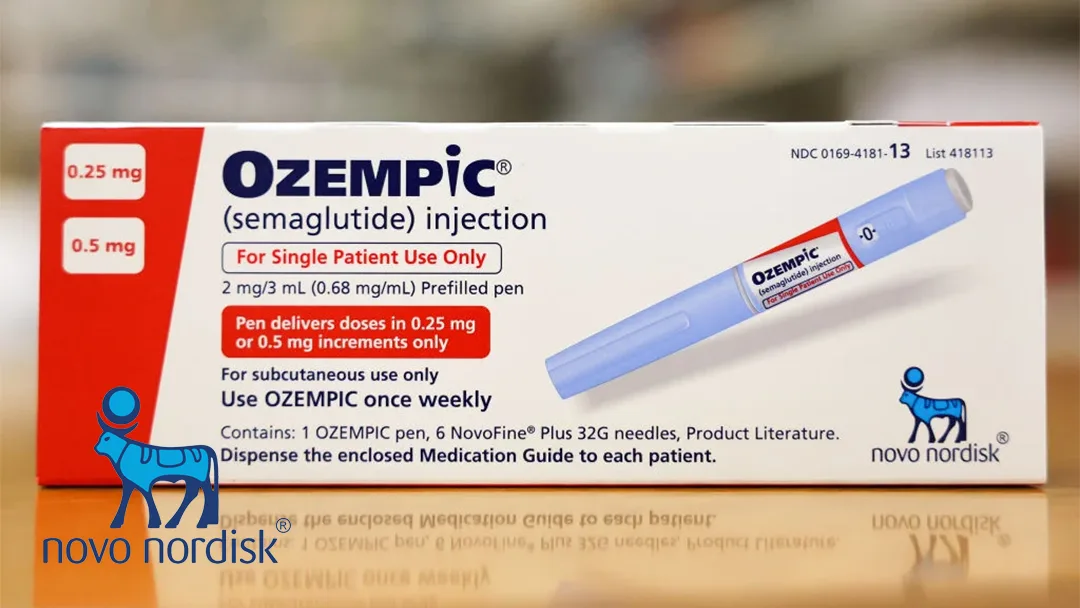
Novo Nordisk (NYSE: NVO) reported at the Clinical Trials on Alzheimer’s Disease conference that semaglutide failed to slow Alzheimer’s disease progression in two Phase 3 trials involving over 3,500 patients, though the drug showed modest biomarker improvements that may warrant further investigation.
Executive Summary: Trial Results & Biomarker Data
| Outcome Measure | Result | Clinical Significance |
|---|---|---|
| Primary Endpoint | Failed to slow cognitive progression | No clinical efficacy demonstrated |
| Patient Enrollment | >3,500 patients across two trials | Large, adequately powered studies |
| Cognitive Benefit | No improvement observed | Trials did not meet objectives |
| Next Steps | Under evaluation | Company analyzing subset data |
Biomarker Findings: Mixed Signals Despite Clinical Failure
Positive Signals (10% or less reductions):
- Neurodegeneration markers: modest decreases in CSF
- Inflammation markers: slight reductions observed
- Tau protein deposits: limited reduction in abnormal protein
Negative Signals:
- Majority of 30 biomarkers: no change detected
- Clinical correlation: biomarker improvements did not translate to cognitive benefit
Peter Johannsen, Novo’s international medical vice president, stated: “semaglutide actually does something to biomarkers,” but emphasized that “we still think it was the right decision. This was a scientific question that needed an answer, although we didn’t get the answer that we had hoped for.”
Strategic Context & Alzheimer’s Pipeline
| Alzheimer’s Asset | Mechanism | Status | Key Differentiator |
|---|---|---|---|
| Semaglutide | GLP-1 receptor agonist | Phase 3 failed | Metabolic approach to neurodegeneration |
| Lecanemab (Eisai/Biogen) | Anti-amyloid antibody | Marketed | Modest clinical benefit |
| Donanemab (Lilly) | Anti-amyloid antibody | Marketed | Similar efficacy to lecanemab |
Market Reality:
- $6 billion global Alzheimer’s therapeutic market
- High failure rate: 99% of Alzheimer’s drugs fail in development
- Metabolic hypothesis: Novo’s approach was novel but unproven
Next Steps & Decision Making
Current Status:
- Data analysis ongoing to identify potential responder subpopulations
- No commitment to additional trials at this time
- Focus on understanding biomarker-clinical disconnect
Peter Johannsen on Future: “We are still digging into the data, and it’s too early to say what its next steps will be.”
Clinical Implications:
- GLP-1 mechanism may not be sufficient for Alzheimer’s modification
- Biomarker improvements without clinical benefit question therapeutic hypothesis
- Resources may be redirected to other neurodegeneration programs
Forward‑Looking Statements
This brief contains forward‑looking statements regarding Novo Nordisk’s potential next steps for semaglutide in Alzheimer’s disease. Actual decisions may differ based on complete data analysis, regulatory feedback, and strategic prioritization of R&D resources. The biomarker findings have not been independently verified.-Fineline Info & Tech