


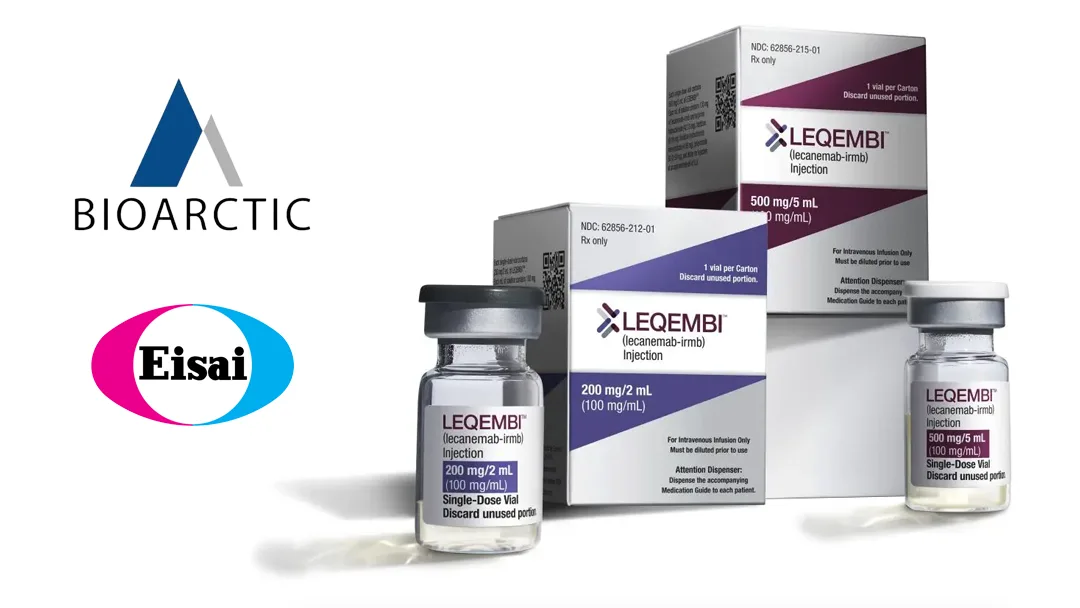
BioArctic AB (OTCMKTS: BRCTF) partner Eisai (TYO: 4523) announced submission of a proposed Marketing Authorisation Variation to the European Medicines Agency (EMA) for a once every four weeks intravenous (IV) infusion maintenance dosing for lecanemab in Alzheimer’s disease.
Contents
Regulatory Submission & Dosing Change
| Item | Detail |
|---|---|
| Companies | BioArctic AB / Eisai |
| Submission | Marketing Authorisation Variation to EMA |
| Drug | Lecanemab (anti‑amyloid beta antibody) |
| Current Dosing | IV infusion once every two weeks (10 mg/kg) |
| Proposed Dosing | After 18 months, transition to once every four weeks |
| Indication | Mild cognitive impairment (MCI) or mild dementia due to Alzheimer’s disease (early AD) |
| Patient Criteria | ApoE ε4 non‑carriers or heterozygotes with confirmed amyloid pathology |
| Discontinuation | Upon progression to moderate Alzheimer’s disease |
Drug Profile & Collaboration
- Mechanism: Anti‑amyloid beta protofibril antibody that clears amyloid plaques in early Alzheimer’s disease
- Origin: Originally developed by BioArctic; Eisai leads clinical development, regulatory filings, and global commercialization
- Regional Rights: BioArctic retains co‑commercialization rights in the Nordic region together with Eisai
- Strategic Significance: Reduced dosing frequency improves patient convenience and healthcare system resource allocation
Market Impact & Commercial Context
- Alzheimer’s Market: Global market valued at $8 billion in 2025, projected to exceed $15 billion by 2030 driven by amyloid‑targeting therapies
- Competitive Landscape: Lecanemab competes with Biogen/Eisai’s aducanumab (discontinued) and Eli Lilly’s donanemab; less frequent dosing provides differentiation
- Healthcare Efficiency: Four‑week maintenance reduces infusion center burden by 50% after 18 months, improving capacity utilization
- Revenue Implication: Analysts estimate the dosing change could improve adherence and extend treatment duration, adding $500 million–1 billion to peak sales potential
- Regulatory Timeline: EMA review typically 6–12 months for variations; approval expected Q3 2026
Forward‑Looking Statements
This brief contains forward‑looking statements regarding EMA review timeline, commercial expectations, and market impact of the lecanemab dosing variation. Actual results may differ due to regulatory review outcomes, competitive dynamics, and market adoption rates.-Fineline Info & Tech