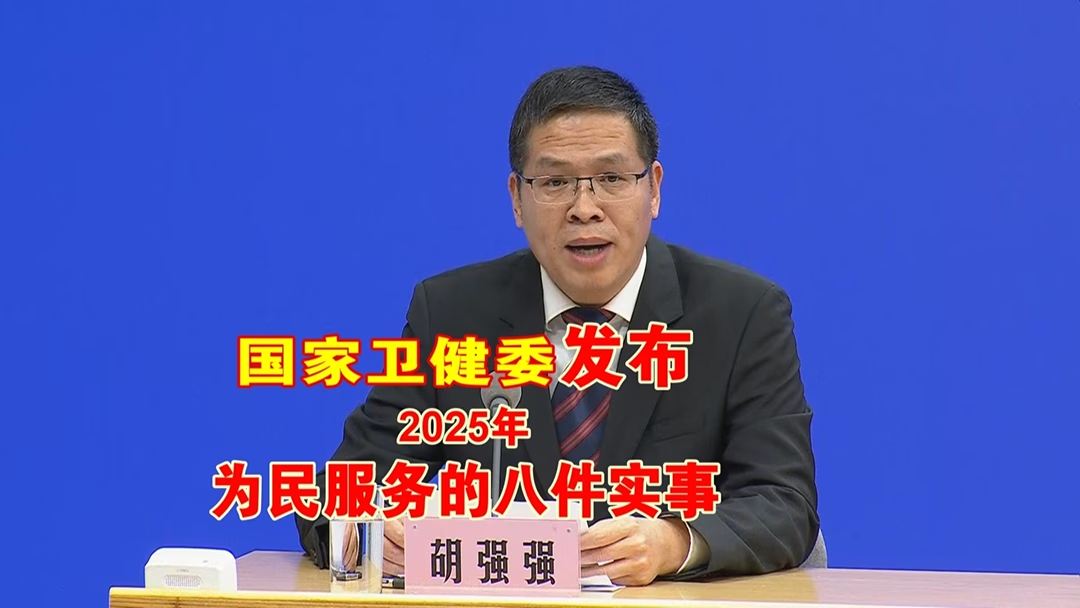



China’s State Council this week issued the Implementation Regulations of the Drug Administration Law, a comprehensive 89‑article framework taking effect on May 15 2026. The regulations establish stricter oversight across the drug lifecycle while accelerating pathways for innovation, data protection, and pediatric and rare disease therapies.
Regulatory Framework Overview
| Item | Detail |
|---|---|
| Effective Date | May 15 2026 |
| Structure | 89 articles across nine chapters |
| Core Principles | People‑centered, scientific, ethical, comprehensive risk prevention |
| Key Focus Areas | Innovation support, certificate management, accelerated approval, data protection |
| State Priorities | New drug R&D, traditional Chinese medicine (TCM) innovation, generic drug quality improvement |
Key Policy Provisions
Innovation & Approval Acceleration
- Four Expedited Pathways: Breakthrough Therapy Designation, Conditional Approval, Priority Review, and Special Approval for eligible applications
- Overseas Data: Research data obtained abroad may be used for registration if compliant with Chinese regulations
- TCM Promotion: State will advance TCM inheritance and innovation, leveraging its role in prevention and healthcare
Certificate Validity & Renewal
All major drug‑related certificates are valid for five years, including:
- Drug Non‑clinical Safety Evaluation Research Institution Qualification Certificate
- Drug Registration Certificate
- Drug Manufacturing License
- Drug Distribution License
- Chemical API Approval Certificate
- Medical Institution Preparation Permit
Medical Institution Preparation Registration Certificate: Valid for three years
All certificates require renewal upon expiration.
Market Exclusivity & Data Protection
- Pediatric Drugs: Up to 2‑year market exclusivity for new pediatric varieties, dosage forms, or indications meeting certain conditions
- Rare Disease Drugs: Up to 7‑year market exclusivity for eligible products, provided marketing authorization holder ensures supply (failure results in termination)
- Data Protection: Drugs with new chemical components receive up to 6 years protection for undisclosed clinical and other data
Manufacturing Restrictions & Exceptions
Prohibited from delegated production:
- Blood products, narcotic drugs, psychotropic substances, medicinal toxic drugs, drug manufacturing precursors, and combination products containing these substances
Allowed segmented delegated production (with unified quality assurance) for:
- Drugs with special production processes
- Clinically urgent drugs
- Multivalent/multicomponent vaccines
Pre‑approval commercial batches (for new drugs, rare disease drugs, shortage drugs, and other urgent therapies) may be marketed if produced before obtaining approval documents and passing GMP inspections, provided they meet release requirements.
Online Sales Prohibition
Prohibited from online sales:
- Vaccines, blood products, narcotic drugs, psychotropic substances, medicinal toxic drugs, radioactive pharmaceuticals, and drug manufacturing precursors
- Other high‑risk drugs as specified by the State Council drug regulatory department
Clinical Import Pathway
Medical institutions may apply to import small quantities of clinically urgent drugs; applications will be reviewed by the national drug regulatory department or authorized provincial governments.
Market Impact & Strategic Implications
- Innovation Incentive: Expanded exclusivity and data protection strengthen IP rights, encouraging ¥100 billion+ annual R&D investment by domestic pharma
- Manufacturing Flexibility: Segmented production rules enable CDMO growth, particularly for complex biologics and vaccines
- Online Pharmacy Constraints: Further restrictions on controlled substances reinforce offline distribution dominance; high‑risk drug lists will be closely watched by e‑pharmacy platforms
- Import Acceleration: Streamlined urgent import pathway benefits rare disease and oncology patients needing immediate access to foreign drugs
- Compliance Burden: Five‑year renewal cycle increases administrative workload; companies must prepare for 2027 renewal wave
- Next Steps: Provincial drug regulators will issue implementation guidelines by Q2 2026; industry associations conducting compliance training throughout 2026
Forward‑Looking Statements
This brief contains forward‑looking statements regarding regulatory implementation timelines, market impacts, and industry adaptation to the new Drug Administration Law Implementation Regulations. Actual outcomes may differ due to regulatory interpretation, enforcement inconsistencies, and industry lobbying efforts.-Fineline Info & Tech