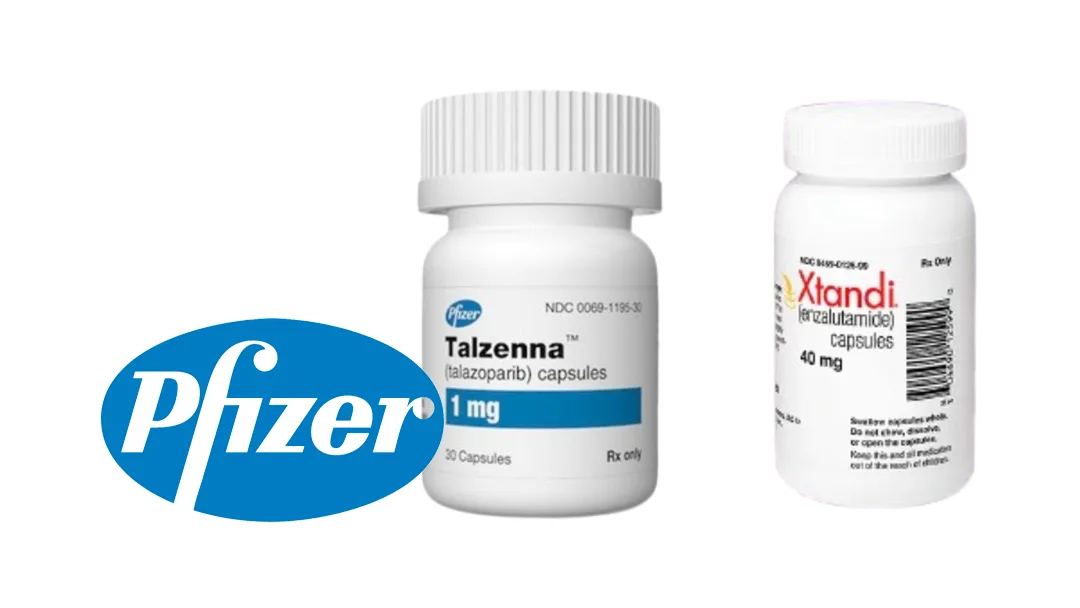
Pfizer Inc. (NYSE: PFE) announced positive topline results from the Phase 3 TALAPRO-3 study, demonstrating that TALZENNA (talazoparib) plus XTANDI (enzalutamide) achieved statistically significant and clinically meaningful improvement in radiographic progression-free survival (rPFS) in patients with homologous recombination repair (HRR) gene-mutated metastatic castration-sensitive prostate cancer (mCSPC/mHSPC), with efficacy markedly exceeding the pre-specified target and consistent benefit across BRCA and non-BRCA HRR alterations.
Broad genomics-based indication vs. BRCA-only competitors (Lynparza)
Market Impact & Outlook
Prostate Cancer Market Dynamics: Global prostate cancer therapeutics market exceeds US$15 billion annually; mCSPC (hormone-sensitive) segment represents ~60% of metastatic patients with significant unmet need for intensified first-line therapy beyond androgen deprivation + docetaxel/aripiprazole.
PARP+ARPI Combination Rationale: TALZENNA (PARP inhibitor) exploits synthetic lethality in HRR-deficient tumors + XTANDI (ARPI) blocks androgen receptor signaling; TALAPRO-3 validates mechanism in earlier metastatic setting vs. TALAPRO-2 (mCRPC) and PROpel (Lynparza+Zytiga).
Pfizer Oncology Portfolio Synergies: TALZENNA (acquired via Medivation 2016) + XTANDI (Pfizer/Astellas co-promotion) combination leverages existing commercial infrastructure; mCSPC approval would expand addressable market by ~50% vs. current mCRPC indication.
Competitive Positioning: TALAPRO-3 success positions Pfizer/Astellas vs. AstraZeneca/Janssen’s PROpel (Lynparza+abiraterone) and Bayer’s Nubeqa combinations; HRR-biomarker-defined approach may enable precision marketing vs. all-comer PARP combinations.
Regulatory Catalyst Timeline: sNDA submission expected H2 2026; potential FDA approval 2027 assuming priority review; EU EMA parallel submission anticipated with potential label expansion to all HRR-mutated mCSPC regardless of chemotherapy candidacy.
Forward‑Looking Statements This brief contains forward‑looking statements regarding regulatory submission timelines, label expansion expectations, and commercial projections for TALZENNA plus XTANDI in mCSPC. Actual results may differ due to regulatory review outcomes, competitive dynamics, and overall survival data maturation.-Fineline Info & Tech