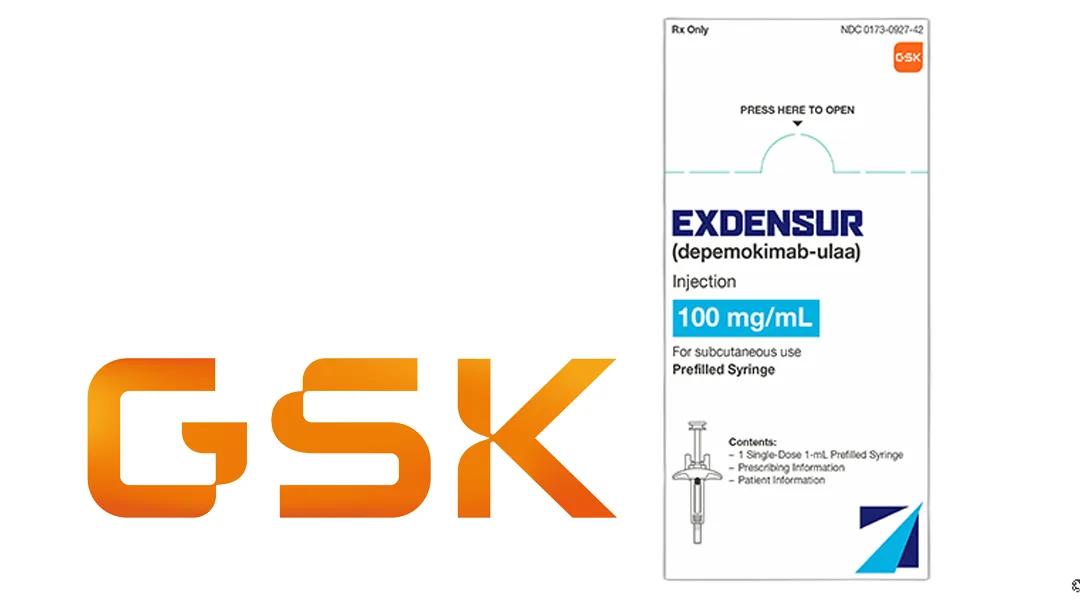
China’s National Medical Products Administration (NMPA) has approved GlaxoSmithKline plc (GSK, NYSE: GSK)’s Exdensur (depemokimab) as an add-on maintenance treatment for severe asthma characterized by an eosinophilic phenotype in patients aged 12 years and older. The approval marks Exdensur as the first ultra-long-acting biologic specifically evaluated for respiratory diseases with underlying type 2 inflammation in the Chinese market.
Regulatory Approval Summary
| Parameter | Detail |
|---|---|
| Approving Agency | NMPA (China) |
| Company | GlaxoSmithKline plc (GSK, NYSE: GSK) |
| Product | Exdensur (depemokimab) |
| Indication | Severe eosinophilic asthma (add-on maintenance) |
| Patient Population | Adults and pediatric patients ≥12 years |
| Dosing Regimen | Twice annually |
| Supporting Trials | SWIFT-1 and SWIFT-2 Phase III studies |
Clinical Evidence Profile
- Trial Design: Two Phase III clinical trials (SWIFT-1 and SWIFT-2) conducted alongside standard of care
- Primary Endpoint: Reduction in asthma exacerbations compared to placebo
- Key Finding: Depemokimab administered twice annually consistently reduced asthma exacerbations versus placebo across both studies
- Mechanism Validation: Confirmed efficacy in targeting IL-5 pathway in severe eosinophilic asthma
Product Differentiation & Mechanism
| Feature | Competitive Advantage |
|---|---|
| Target | Interleukin-5 (IL-5) – key cytokine in type 2 inflammation |
| Binding Affinity | High IL-5 binding affinity |
| Half-Life | Extended half-life enabling ultra-long dosing |
| Dosing Frequency | Just twice per year – significantly less frequent than existing biologics |
| Innovation Status | First ultra-long-acting biologic for type 2 inflammatory respiratory diseases |
| Therapeutic Class | Anti-IL-5 monoclonal antibody with enhanced pharmacokinetics |
The ultra-long dosing regimen represents a significant advancement in patient convenience and compliance, addressing a major limitation of current biologic therapies that typically require monthly or bi-monthly administration.
Market Impact Analysis
| Stakeholder | Implication |
|---|---|
| Severe Asthma Patients | Dramatically reduced treatment burden with twice-yearly dosing vs. monthly injections |
| Healthcare Providers | Simplified treatment adherence monitoring and improved long-term disease control |
| Payers/Health Systems | Potential cost-effectiveness through reduced administration visits and improved outcomes |
| GSK Commercial Strategy | Expands respiratory biologics portfolio in China’s growing severe asthma market |
| Competitive Landscape | Disrupts existing anti-IL-5/IL-5R market with superior dosing convenience |
China represents one of the world’s largest asthma markets, with an estimated 30-40 million patients, including a substantial population with severe eosinophilic disease who could benefit from targeted biologic therapy.
Strategic Outlook
- Market Access: NMPA approval enables immediate commercial launch in China’s severe asthma segment
- Global Positioning: China approval follows international regulatory momentum for depemokimab
- Commercial Infrastructure: GSK’s established respiratory franchise in China provides strong launch platform
- Pricing Strategy: Ultra-convenient dosing may support premium pricing despite competitive biologic landscape
- Expansion Potential: Success in asthma may support development in other type 2 inflammatory conditions
Forward‑Looking Statements
This brief contains forward-looking statements regarding GSK’s product commercialization, market access, and competitive positioning. Actual commercial performance may vary based on pricing negotiations, market adoption, and competitive dynamics.-Fineline Info & Tech