



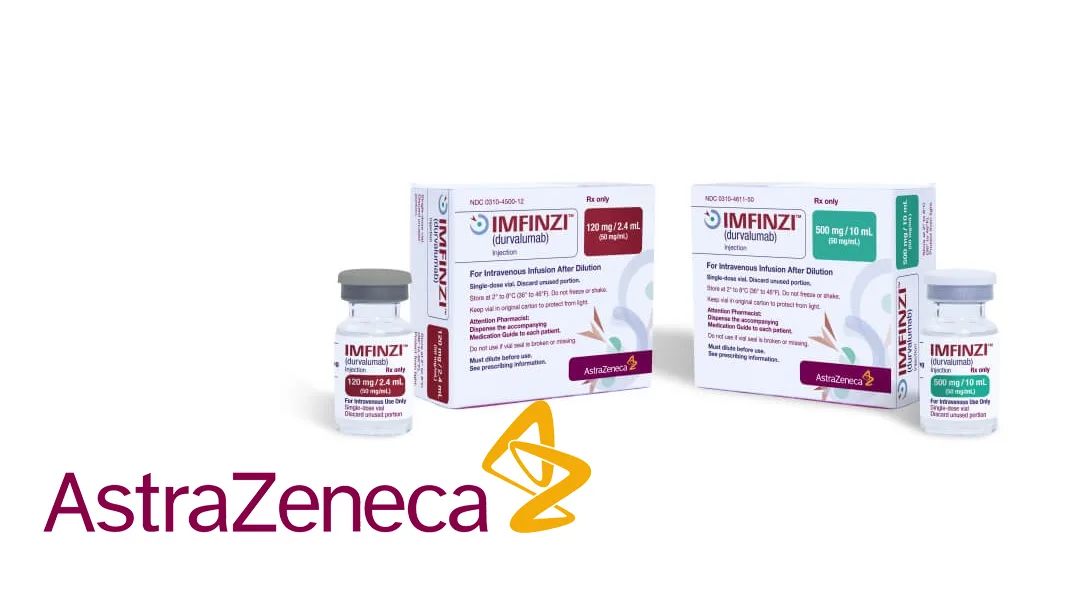
AstraZeneca plc (NYSE: AZN) released high-level results from a prespecified interim analysis of the Phase III VOLGA clinical trial, demonstrating that perioperative Imfinzi (durvalumab) combined with neoadjuvant Enfortumab Vedotin (EV) significantly improved both event-free survival (EFS) and overall survival (OS) in patients with muscle-invasive bladder cancer (MIBC) who are ineligible for or refuse cisplatin-based chemotherapy.
Clinical Trial Results Summary
| Treatment Arm | EFS Result | OS Result | Patient Population |
|---|---|---|---|
| Imfinzi + EV | Statistically significant improvement | Statistically significant improvement | Cisplatin-ineligible/refusing MIBC |
| Imfinzi + Imjudo + EV | Statistically significant improvement | Favorable trend (not statistically significant) | Cisplatin-ineligible/refusing MIBC |
The VOLGA trial represents a breakthrough in perioperative treatment strategies for MIBC, addressing a critical unmet need for patients unable to tolerate standard cisplatin-based regimens.
Drug Profile & Combination Rationale
- Imfinzi (durvalumab): PD-L1 inhibitor approved across multiple tumor types
- Imjudo (tremelimumab): CTLA-4 inhibitor enhancing T-cell activation
- Enfortumab Vedotin (EV): Antibody-drug conjugate targeting Nectin-4, developed in collaboration with Seagen
- Treatment Paradigm: Perioperative (neoadjuvant + adjuvant) approach designed to eliminate micrometastatic disease and prevent recurrence
The dual combination strategies leverage complementary mechanisms of action: EV delivers targeted cytotoxic payload to tumor cells while immune checkpoint inhibitors enhance anti-tumor immune responses both locally and systemically.
Competitive Landscape in Bladder Cancer
| Therapeutic Approach | Key Players | Development Stage |
|---|---|---|
| Cisplatin-based chemotherapy | Standard of care | Approved |
| PD-1/PD-L1 monotherapy | Multiple companies | Approved (limited efficacy) |
| Antibody-drug conjugates | Seagen/AZ (EV), others | Approved/Phase III |
| Perioperative immunotherapy combinations | AstraZeneca (VOLGA) | Phase III positive |
AstraZeneca’s VOLGA results position the company at the forefront of perioperative bladder cancer treatment, potentially establishing a new standard of care for cisplatin-ineligible patients who represent approximately 50% of the MIBC population.
Strategic Implications & Commercial Outlook
- Market Expansion: Success in perioperative setting would significantly expand Imfinzi’s addressable market beyond metastatic indications
- Franchise Strengthening: Validates AstraZeneca’s bladder cancer portfolio leadership, complementing existing EV approvals
- Regulatory Pathway: Strong EFS and OS data support potential accelerated approval discussions with FDA and EMA
- Revenue Impact: MIBC represents a $2+ billion global opportunity, with perioperative treatment potentially generating $500M+ annual revenue at peak penetration
The positive interim analysis enables AstraZeneca to prepare for regulatory submissions while continuing to mature OS data for the Imfinzi + Imjudo + EV arm in subsequent analyses.
Forward‑Looking Statements
This brief contains forward-looking statements regarding regulatory approvals, clinical development timelines, and commercial potential for Imfinzi-based combinations. Actual results may differ due to risks including final trial outcomes, regulatory requirements, and competitive dynamics.-Fineline Info & Tech