 By Fineline Cube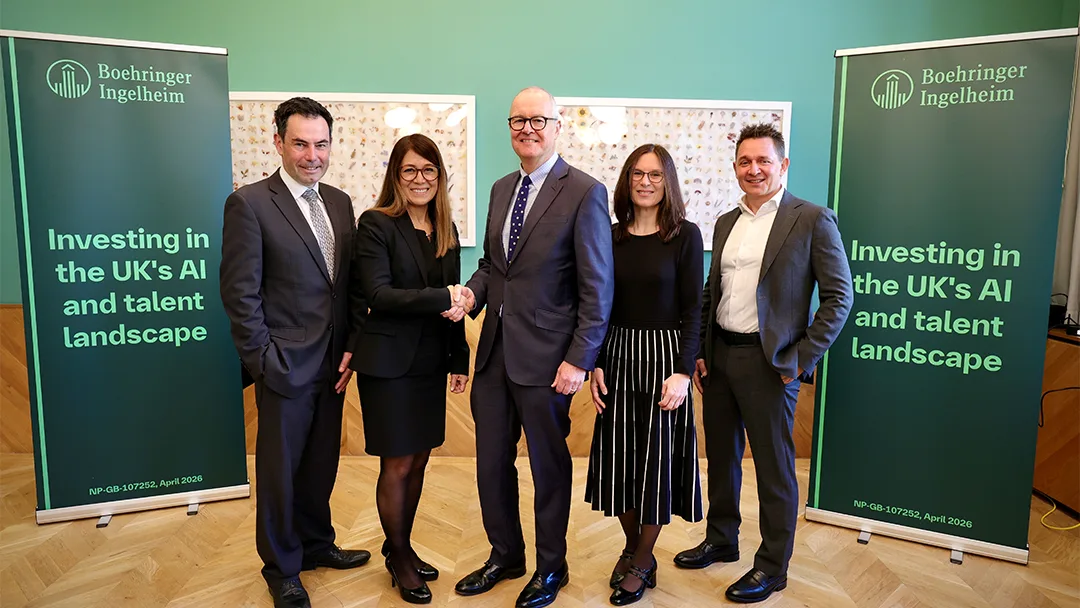
Boehringer Ingelheim, the privately held German pharmaceutical leader, has launched a new Artificial Intelligence (AI) and Machine Learning Hub in King’s Cross, London, as part of its global “Computational Innovation” initiative. The company announced a €150 million investment over ten years to scale AI-driven R&D, with plans to onboard 50 AI specialists by end-2027 at the London site alone.
Strategic Investment Overview
| Component | Detail |
|---|---|
| Location | King’s Cross, London – Europe’s leading life sciences and tech corridor |
| Investment | €150 million over 10 years (global AI R&D commitment) |
| Talent Buildout | 50 AI/ML experts in London by Q4 2027 |
| Global Footprint | Computational Innovation units now active in Germany, Austria, U.S., and U.K. |
| Core Focus Areas | AI/ML, human genetics, computational biology, target validation |
Mission & Scientific Impact
The London hub will serve as Boehringer Ingelheim’s dedicated AI center of excellence, designed to:
- Decipher complex biological mechanisms underlying diseases with high unmet medical need
- Leverage multimodal data (genomics, real-world evidence, imaging) to identify high-confidence therapeutic targets
- Accelerate preclinical decision-making through predictive modeling of compound efficacy and safety
- Enable faster, smarter portfolio choices—reducing late-stage attrition and increasing clinical success rates
“AI is no longer optional in drug discovery—it’s existential,” said a company spokesperson. “This hub allows us to embed machine intelligence into every stage of our R&D engine.”
Competitive Context
While rivals like Roche, AstraZeneca, and Novartis have established AI partnerships or internal labs, Boehringer Ingelheim’s approach emphasizes in-house capability building and vertical integration of computational science across therapeutic areas—including oncology, immunology, CNS, and cardiometabolic diseases.
The London location provides access to world-class talent from UCL, Imperial College, and the Alan Turing Institute, as well as proximity to the Francis Crick Institute and UK Biobank data resources.
Forward Outlook
- 2026–2027: Ramp-up of AI team; integration with existing R&D pipelines
- 2028+: Expected contribution to ≥30% of early-stage target nominations via AI-driven insights
- Long-Term Goal: Shorten drug discovery timelines by 18–24 months per program
Forward‑Looking Statements
This announcement contains forward-looking information regarding investment, hiring, and R&D strategy. Actual outcomes may vary due to technological, regulatory, and competitive factors.-Fineline Info & Tech