


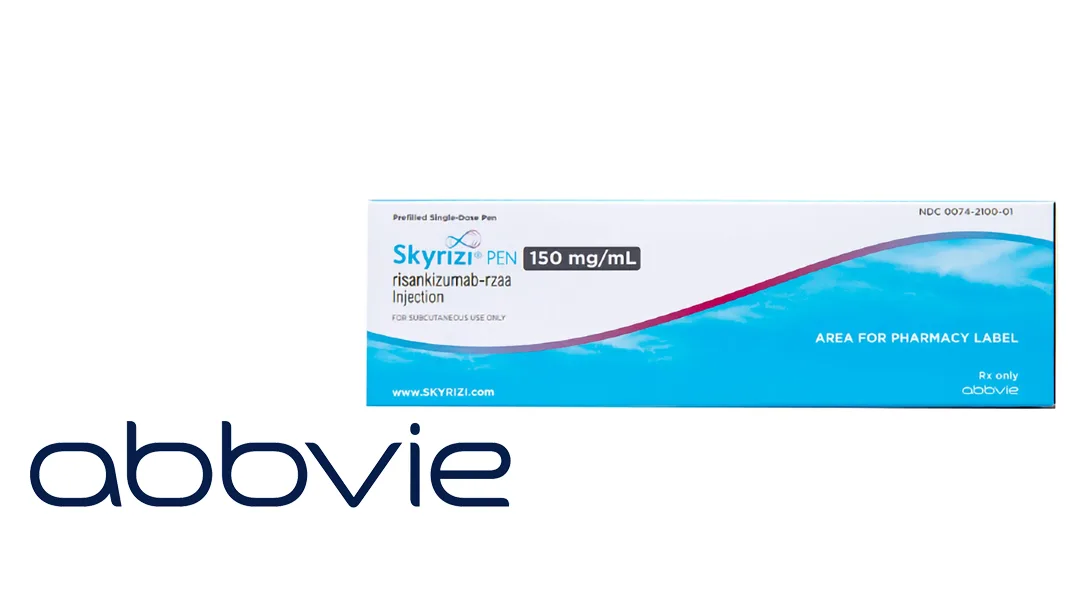
AbbVie (NYSE: ABBV) announced it has submitted a marketing approval filing to the U.S. Food and Drug Administration (FDA) for Skyrizi (risankizumab) subcutaneous (SC) induction therapy for the treatment of adult patients with moderately to severely active Crohn’s disease (CD).
Regulatory Filing Details
| Component | Detail |
|---|---|
| Drug Candidate | Skyrizi (risankizumab) |
| Formulation | Subcutaneous (SC) induction therapy |
| Indication | Moderately to severely active Crohn’s disease (CD) in adults |
| Regulatory Agency | U.S. FDA |
| Filing Type | Marketing approval application |
| Development Stage | Late-stage regulatory submission |
Drug Profile & Mechanism of Action
- Compound Class: Interleukin-23 (IL-23) inhibitor
- Mechanism: Selectively blocks IL-23 by binding to its p19 subunit
- Biological Rationale: IL-23 is a key cytokine involved in inflammatory processes associated with chronic immune-mediated diseases
- Administration: Subcutaneous injection for induction therapy
- Target Population: Adult patients with moderate-to-severe Crohn’s disease activity
Existing Approvals & Market Position
| Jurisdiction | Approved Indications |
|---|---|
| U.S. FDA | Plaque psoriasis, psoriatic arthritis, Crohn’s disease, ulcerative colitis |
| European EMA | Plaque psoriasis, psoriatic arthritis, Crohn’s disease, ulcerative colitis |
| Current CD Status | Previously approved for Crohn’s disease maintenance therapy |
| New Filing Focus | Subcutaneous induction therapy specifically for CD |
Strategic Significance
For AbbVie:
- Franchise Expansion: Extends Skyrizi’s Crohn’s disease indication to include dedicated induction therapy
- Competitive Differentiation: Subcutaneous formulation offers patient convenience advantages over intravenous alternatives
- Revenue Growth: Addresses full treatment continuum from induction through maintenance
- Market Leadership: Strengthens position in competitive IL-23 inhibitor market
Market Context:
- Crohn’s Disease Burden: Affects approximately 1 million Americans with significant unmet needs in induction therapy
- Treatment Paradigm: Current induction therapies include corticosteroids, biologics, and small molecules
- Patient Preference: Growing demand for subcutaneous self-administered therapies over clinic-based IV treatments
- IL-23 Class: Established as effective therapeutic approach with favorable safety profile compared to broader immunosuppressants
Commercial Implications
The subcutaneous induction therapy filing represents a strategic enhancement to Skyrizi’s existing Crohn’s disease approval, potentially enabling a complete treatment paradigm where patients can receive both induction and maintenance therapy with the same molecule via convenient subcutaneous administration.
This approach could improve patient adherence, reduce healthcare system burden, and provide AbbVie with a comprehensive solution that addresses the entire Crohn’s disease treatment journey. The established safety and efficacy profile of Skyrizi across multiple immune-mediated indications provides strong support for this expanded use.
Development Timeline & Next Steps
Following the FDA filing submission, AbbVie anticipates standard regulatory review timelines. The company’s extensive experience with Skyrizi regulatory submissions across multiple indications positions it well for efficient agency interactions and potential approval within typical review timeframes.
Forward-Looking Statements
This brief contains forward-looking statements regarding regulatory filings, approval timelines, and commercial potential. Actual outcomes may differ due to risks including regulatory decisions, competitive dynamics, and market adoption rates.-Fineline Info & Tech