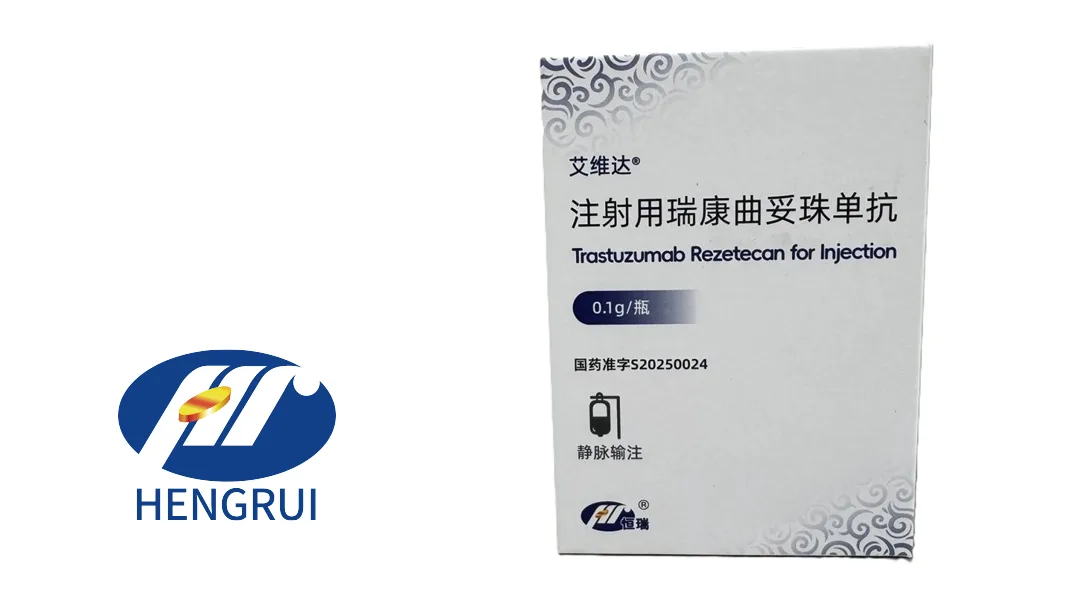




Jiangsu Hengrui Pharmaceuticals Co., Ltd. (SHA: 600276, HKG: 1276) announced that the Phase III SHR-A2009-301 trial for its investigational HER3-targeting antibody drug conjugate (ADC) SHR-A2009 met its primary endpoint with statistical significance in patients with advanced or metastatic non-small cell lung cancer (NSCLC) harboring EGFR mutations who have failed prior EGFR tyrosine kinase inhibitor (TKI) therapy. The study demonstrated that SHR-A2009 significantly prolonged progression-free survival (PFS) compared to platinum-based doublet chemotherapy, establishing a potential new standard of care in this difficult-to-treat population.
Clinical Trial Results & Design
| Trial Parameter | Details |
|---|---|
| Trial Name | SHR-A2009-301 |
| Patient Population | EGFR-mutated advanced/metastatic NSCLC patients who failed prior EGFR TKI therapy |
| Comparator | Platinum-based doublet chemotherapy |
| Primary Endpoint | Progression-Free Survival (PFS) |
| Key Finding | Statistically significant PFS improvement with SHR-A2009 |
| Therapeutic Setting | Post-TKI failure, representing high unmet medical need |
Investigational Agent Profile
SHR-A2009 represents Hengrui’s proprietary ADC platform advancement:
- Target: HER3 (ERBB3), a member of the EGFR family frequently expressed in EGFR-mutated NSCLC
- Structure: Fully human HER3 monoclonal antibody conjugated to a DNA topoisomerase I inhibitor payload
- Development Status: In-house developed by Hengrui, demonstrating internal ADC platform capabilities
- Mechanism Rationale: HER3 expression often persists or increases after EGFR TKI resistance develops, providing a rational target for ADC therapy
Market Opportunity & Unmet Need
- Patient Population: Approximately 30,000-40,000 patients annually in major markets develop resistance to EGFR TKIs
- Current Standard: Limited options post-TKI failure, with platinum chemotherapy providing modest benefit and significant toxicity
- Competitive Landscape: No approved HER3-targeting therapies in NSCLC, positioning SHR-A2009 as potential first-in-class
- Commercial Potential: Analysts project peak annual sales of $800 million to $1.2 billion if approved globally
Regulatory Pathway & Next Steps
- Immediate Action: Hengrui plans to submit a pre-NDA communication request to China’s Center for Drug Evaluation (CDE) of the National Medical Products Administration (NMPA)
- Timeline Expectations: Potential NDA submission in Q4 2026 with accelerated review pathway likely
- Global Strategy: Success supports parallel regulatory filings with FDA and EMA for international markets
- Label Differentiation: First ADC to demonstrate PFS benefit in post-TKI EGFR-mutated NSCLC provides strong competitive positioning
Strategic Implications for Hengrui
- ADC Platform Validation: Success demonstrates Hengrui’s capability to develop best-in-class ADCs internally
- Oncology Portfolio Expansion: Complements existing immuno-oncology and targeted therapy portfolio
- International Recognition: Phase III success in competitive NSCLC space enhances global credibility
- Revenue Diversification: Potential blockbuster asset reduces reliance on existing commercial products
Competitive Dynamics
- HER3 Target Race: Multiple companies developing HER3-targeting agents, but Hengrui appears to be first to demonstrate Phase III success in NSCLC
- ADC Market Leadership: Positions Hengrui among elite Chinese biopharma companies with validated ADC platforms
- TKI Resistance Focus: Addresses critical gap in EGFR-mutated NSCLC treatment paradigm
- Combination Potential: Future studies may explore SHR-A2009 in combination with next-generation TKIs or immunotherapies
Safety Profile Considerations
While detailed safety data was not disclosed in the announcement, the comparison to platinum-based chemotherapy suggests:
- Toxicity Advantage: ADC approach may offer improved tolerability compared to traditional chemotherapy
- Outpatient Administration: Potential for less intensive supportive care requirements
- Quality of Life: Reduced toxicity burden could translate to better patient-reported outcomes
Forward-Looking Statements
This brief contains forward-looking statements regarding clinical development, regulatory approvals, and commercial expectations for SHR-A2009. Actual results may differ due to risks including final trial data analysis, regulatory decisions, competitive dynamics, and market adoption patterns.-Fineline Info & Tech