



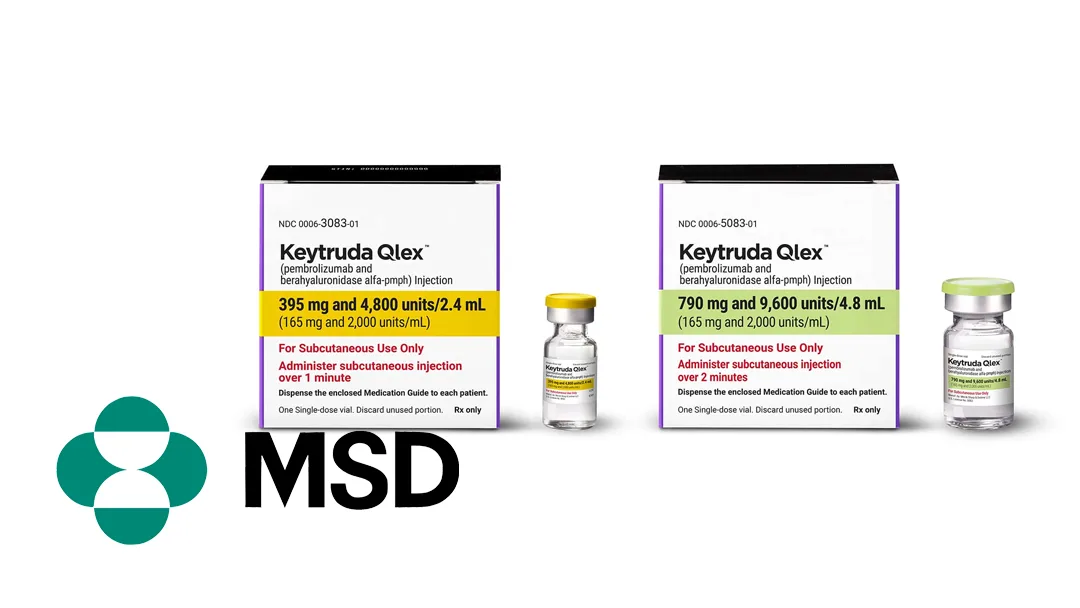
Merck & Co., Inc. (MSD; NYSE: MRK) announced that the U.S. Food and Drug Administration (FDA) has approved Keytruda (pembrolizumab) and KEYTRUDA QLEX (pembrolizumab and berahyaluronidase alfa-pmph), each in combination with Merck’s first-in-class oral hypoxia-inducible factor-2α (HIF-2α) inhibitor Welireg (belzutifan), as adjuvant treatment for adult patients with clear cell renal cell carcinoma (ccRCC) who are at intermediate-high or high risk of recurrence following nephrectomy, or following nephrectomy and resection of metastatic lesions.
Regulatory Milestone
| Item | Detail |
|---|---|
| Agency | FDA (United States) |
| Approval Type | Full approval |
| Products | Keytruda + Welireg combination therapy |
| Indication | Adjuvant treatment of ccRCC at intermediate-high/high risk of recurrence |
| Patient Population | Post-nephrectomy patients with or without metastatic lesion resection |
| Approval Basis | Phase 3 LITESPARK-022 trial results |
Clinical Trial Results – LITESPARK-022
| Endpoint | Keytruda + Welireg | Keytruda + Placebo | Hazard Ratio (95% CI) | p-value |
|---|---|---|---|---|
| Disease-Free Survival (DFS) | Primary endpoint met | Comparator arm | HR=0.72 [0.59-0.87] | 0.0003 |
| Risk Reduction | 28% reduction in disease recurrence, metastasis, or death | — | — | — |
| 24-month DFS Rate | 81% [0.78-0.83] | 74% [0.71-0.77] | — | — |
| Median DFS | Not reached | Not reached | — | — |
| Overall Survival | Not mature (interim analysis) | Not mature | — | — |
Trial Design Highlights
- Patient Enrollment: 1,841 patients with ccRCC at intermediate-high or high risk of recurrence
- Treatment Arms: Keytruda + Welireg vs. Keytruda + placebo
- Primary Endpoint: Disease-free survival (DFS)
- Statistical Significance: Highly significant improvement (p=0.0003)
Product Portfolio Details
- Keytruda (pembrolizumab): Anti-PD-1 immunotherapy, established backbone in multiple cancer indications
- KEYTRUDA QLEX: Subcutaneous formulation combining pembrolizumab with berahyaluronidase alfa-pmph for enhanced delivery
- Welireg (belzutifan): First-in-class oral HIF-2α inhibitor targeting the hypoxia pathway in ccRCC
- Combination Rationale: Dual mechanism targeting both immune checkpoint (PD-1) and tumor microenvironment (HIF-2α)
Market Impact & Competitive Positioning
- ccRCC Treatment Landscape: Addresses significant unmet need in adjuvant setting for high-risk kidney cancer patients
- Commercial Advantage: First approved combination of anti-PD-1 therapy with HIF-2α inhibitor in adjuvant ccRCC
- Revenue Potential: Expands Keytruda’s dominance in renal cell carcinoma beyond metastatic settings
- Patient Benefit: 28% relative risk reduction translates to meaningful clinical benefit in preventing recurrence
Strategic Implications
This approval represents a significant expansion of Merck’s kidney cancer franchise, leveraging the complementary mechanisms of immune checkpoint inhibition and HIF-2α pathway blockade. The combination approach addresses the complex biology of ccRCC, which is characterized by VHL mutations leading to HIF-2α accumulation and immune evasion.
Next Steps & Future Development
- Global Regulatory Submissions: Expected filings with EMA and other international agencies
- Overall Survival Data: Mature OS results anticipated in future analyses
- Additional Indications: Potential exploration in other HIF-2α-driven malignancies
- Commercial Launch: Immediate availability through Merck’s established oncology distribution network
Forward‑Looking Statements
This brief contains forward-looking statements regarding regulatory approvals, clinical development, and commercial expectations. Actual results may differ due to risks including competitive dynamics, market adoption, and future clinical trial outcomes.-Fineline Info & Tech