


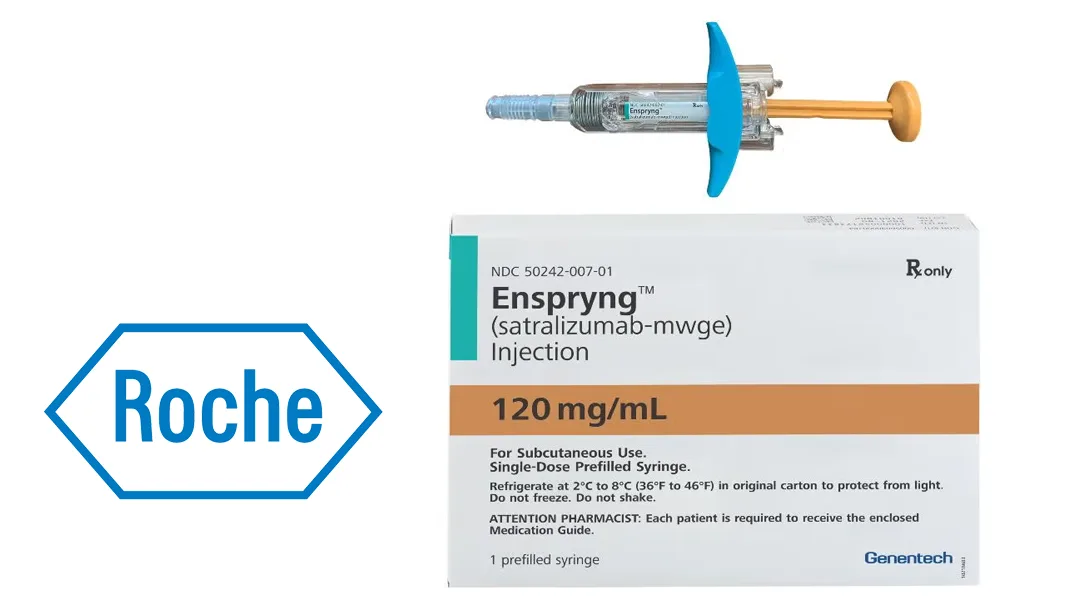
Roche Holding AG (SWX: ROP; OTCMKTS: RHHBY) announced today that the U.S. Food and Drug Administration (FDA) has accepted and granted Priority Review to a supplemental Biologics License Application (sBLA) for Enspryng® (satralizumab) for the treatment of thyroid eye disease (TED).
Developed by Chugai Pharmaceutical Co., Ltd., a member of the Roche Group, Enspryng represents a potential expansion of the first and only IL-6 receptor inhibitor currently approved in approximately 90 countries and regions for neuromyelitis optica spectrum disorder (NMOSD), with an established safety profile across more than 10,000 patients.
Regulatory Milestone
| Parameter | Detail |
|---|---|
| Regulatory Authority | U.S. Food and Drug Administration (FDA) |
| Application Type | Supplemental Biologics License Application (sBLA) |
| Review Designation | Priority Review |
| Review Timeline | 6 months (target action date: Q4 2026) |
| Product | Enspryng (satralizumab) |
| Proposed Indication | Thyroid eye disease (TED) |
| Developer | Chugai Pharmaceutical Co., Ltd. (Roche Group) |
| Current Approvals | NMOSD in ~90 countries/regions including US and EU |
Disease Background & Unmet Need
Thyroid Eye Disease (TED)
- Pathophysiology: Autoimmune inflammatory disorder affecting orbital tissues, driven by IL-6-mediated inflammation
- Clinical Manifestations: Proptosis (eye bulging), diplopia (double vision), periorbital edema, and potential vision loss
- Patient Burden: Significant impact on quality of life, appearance, and visual function
- Current Treatment Landscape:
- First-line: High-dose corticosteroids (limited efficacy, significant toxicity)
- Second-line: Orbital radiation (variable response, long-term risks)
- Surgical interventions: Reserved for severe cases with permanent structural changes
- Market Gap: Critical need for targeted biologic therapies addressing underlying inflammatory mechanisms
IL-6 as Therapeutic Target
- Key Cytokine: Interleukin-6 (IL-6) serves as central mediator in TED pathogenesis
- Inflammatory Cascade: IL-6 drives fibroblast activation, glycosaminoglycan production, and orbital tissue expansion
- Therapeutic Rationale: Targeted IL-6 inhibition offers precision approach to modulate disease-specific inflammation
Enspryng: Novel Recycling Antibody Technology
Molecular Innovation
- Class: Humanized monoclonal antibody targeting IL-6 receptor activity
- Core Technology: Novel recycling antibody platform enabling:
- Strong binding affinity to IL-6 receptor
- Repeated receptor engagement through intracellular recycling mechanism
- Sustained target inhibition with lower dosing frequency vs. conventional antibodies
- Mechanism Advantage: Rapid and sustained suppression of inflammatory pathways through enhanced pharmacokinetic/pharmacodynamic profile
Clinical Differentiation
- Proven Safety: Well-established profile from NMOSD experience (>10,000 patients)
- Dosing Convenience: Subcutaneous administration with optimized frequency
- Target Specificity: Selective IL-6 pathway inhibition minimizing off-target effects
- Therapeutic Breadth: Potential first IL-6 inhibitor specifically approved for TED
Market Opportunity & Competitive Landscape
TED Market Dynamics
- Prevalence: Estimated 16–19 cases per 100,000 population in the US
- Addressable Population: Approximately 40,000–50,000 active TED patients requiring treatment
- Premium Pricing Environment: Orphan disease designation supports high-value pricing
- Reimbursement Landscape: Favorable coverage for targeted biologics in autoimmune conditions
Competitive Positioning
- First-Mover Potential: Could become first approved IL-6 inhibitor for TED indication
- Differentiation vs. Teprotumumab: Alternative mechanism of action (IGF-1R vs. IL-6R) offering treatment options for non-responders
- Portfolio Synergy: Leverages existing Enspryng commercial infrastructure and physician relationships
- Global Expansion: Success in US could accelerate regulatory filings in other major markets
Commercial Implications for Roche
- Revenue Upside: Peak annual sales potential of USD 300–500 million in TED indication
- Franchise Extension: Expands Enspryng’s therapeutic footprint beyond rare neuroimmunological disorders
- Strategic Value: Strengthens Roche’s position in ophthalmology and autoimmune disease portfolios
- Pricing Power: Orphan drug status and novel mechanism support premium reimbursement
Development Strategy & Next Steps
Regulatory Pathway
- Priority Review Benefits: Accelerated 6-month review timeline vs. standard 10-month process
- Target Approval: Q4 2026 based on current FDA scheduling
- Global Strategy: Potential parallel filings in EU, Japan, and other key markets following US decision
- Label Expansion: Success could support additional autoimmune ophthalmology indications
Clinical Evidence Requirements
- Primary Endpoints: Likely focused on proptosis reduction, clinical activity score improvement, and quality of life measures
- Safety Database: Leveraging extensive NMOSD safety experience to support favorable risk-benefit profile
- Comparative Data: Potential head-to-head studies vs. existing TED therapies in post-marketing commitments
Investment Considerations
Success Catalysts
- Strong Efficacy Data: Demonstrated superiority over current standard of care
- Favorable Safety Profile: Clean safety signal supporting broad patient eligibility
- Physician Adoption: Effective education programs highlighting IL-6 pathway rationale
- Patient Access: Streamlined reimbursement and distribution channels
Risk Factors
- Regulatory Uncertainty: Priority Review doesn’t guarantee approval
- Competitive Pressure: Existing TED therapies with established market presence
- Pricing Scrutiny: High-cost biologics facing increasing payer scrutiny
- Market Size Limitations: Orphan indication with finite addressable population
Forward‑Looking Statements
This brief contains forward-looking statements regarding regulatory review, market opportunities, and commercial expectations. Actual outcomes may differ due to risks including FDA decisions, competitive dynamics, and market adoption rates.-Fineline Info & Tech