


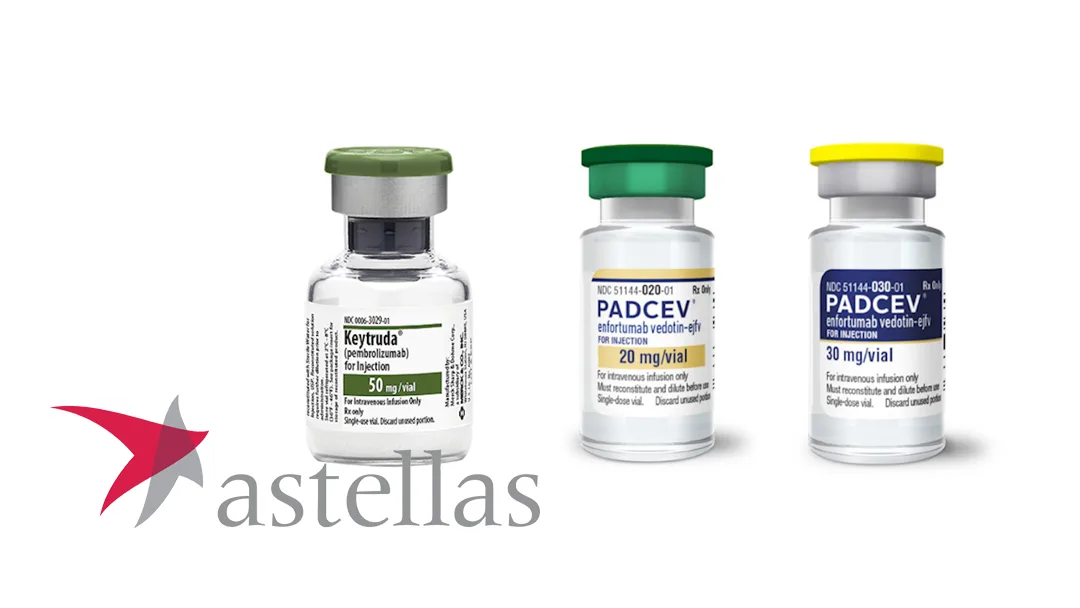
Astellas Pharma Inc. (TYO: 4503) announced that China’s National Medical Products Administration (NMPA) has accepted the Biologics License Application (BLA) for PADCEV® (enfortumab vedotin) in combination with Keytruda® (pembrolizumab) as a perioperative treatment regimen for adults with muscle-invasive bladder cancer (MIBC). The therapy is indicated for use as neoadjuvant treatment before surgery, followed by adjuvant treatment after cystectomy, regardless of patients’ eligibility for cisplatin-containing chemotherapy.
Regulatory Filing Details
| Parameter | Detail |
|---|---|
| Applicant | Astellas Pharma Inc. (TYO: 4503) |
| Regulatory Agency | China National Medical Products Administration (NMPA) |
| Application Type | Biologics License Application (BLA) |
| Product | PADCEV (enfortumab vedotin) + Keytruda (pembrolizumab) |
| Indication | Perioperative treatment of muscle-invasive bladder cancer (MIBC) |
| Patient Population | All MIBC patients regardless of cisplatin eligibility |
| Supporting Trials | Phase 3 EV-303 (KEYNOTE-905) and EV-304 (KEYNOTE-B15) |
Clinical Trial Results – Dual Population Strategy
EV-303 Trial: Cisplatin-Ineligible or Declined Patients
Comparison: PADCEV + Keytruda vs. Surgery Alone
| Endpoint | Hazard Ratio | Risk Reduction | Statistical Significance |
|---|---|---|---|
| Event-Free Survival (EFS) | HR 0.40 | 60% | p<0.0001 |
| Overall Survival (OS) | HR 0.50 | 50% | p<0.0001 |
EV-304 Trial: Cisplatin-Eligible Patients
Comparison: PADCEV + Keytruda vs. Standard Gemcitabine/Cisplatin Chemotherapy
| Endpoint | Hazard Ratio | Risk Reduction | Statistical Significance |
|---|---|---|---|
| Event-Free Survival (EFS) | HR 0.53 | 47% | p<0.0001 |
| Overall Survival (OS) | HR 0.65 | 35% | p<0.001 |
Safety Profile
- Consistent with prior experience with the combination
- No new safety signals observed in either trial
- Manageable adverse event profile supporting perioperative use
Market Context & Therapeutic Innovation
Muscle-Invasive Bladder Cancer Landscape
- Incidence: Approximately 15,000-20,000 new MIBC cases annually in China
- Current Standard: Neoadjuvant cisplatin-based chemotherapy followed by radical cystectomy
- Treatment Gap: 40-50% of patients are ineligible for cisplatin due to renal impairment, hearing loss, or other comorbidities
Paradigm-Shifting Approach
The PADCEV-Keytruda combination represents the first perioperative immunotherapy-antibody drug conjugate (ADC) regimen to demonstrate superior outcomes across both cisplatin-eligible and ineligible populations. This dual-population efficacy addresses the critical unmet need for effective alternatives to cisplatin-based chemotherapy while simultaneously improving outcomes for patients who can tolerate standard therapy.
Commercial Implications for Chinese Market
Market Opportunity
- Total Addressable Population: ~15,000-20,000 MIBC patients annually in China
- Cisplatin-Ineligible Segment: ~7,000-10,000 patients representing immediate market opportunity
- Premium Pricing Potential: Significant clinical benefit supports premium reimbursement positioning
Competitive Advantages
- First-Mover Status: First perioperative ADC-immunotherapy combination in Chinese MIBC market
- Broad Applicability: Single regimen serves entire MIBC population regardless of cisplatin eligibility
- Survival Benefit: Unprecedented 50-60% reduction in death risk for high-need patient segment
Strategic Significance for Astellas Pharma
This BLA submission represents a major milestone in Astellas’ global oncology strategy and demonstrates successful execution of its partnership with Merck (Keytruda developer). The dual-trial approach—simultaneously addressing both cisplatin-eligible and ineligible populations—maximizes market penetration potential and establishes a new standard of care across the entire MIBC spectrum.
China represents one of the world’s largest bladder cancer markets, and approval would position Astellas to capture significant market share in a high-value oncology indication with substantial unmet medical need. The perioperative setting also creates opportunities for long-term patient relationships and potential expansion into other urothelial cancer indications.
Development Timeline & Next Steps
- Q3-Q4 2026: NMPA review process with potential priority review designation
- 2027: Expected approval decision and commercial launch preparation
- 2027+: Integration into Chinese clinical guidelines and reimbursement negotiations
Forward‑Looking Statements
This brief contains forward-looking statements regarding regulatory submissions, clinical trial results, and commercial expectations. Actual results may differ materially due to regulatory decisions, competitive developments, market acceptance, and other risk factors detailed in Astellas Pharma’s SEC filings.-Fineline Info & Tech