


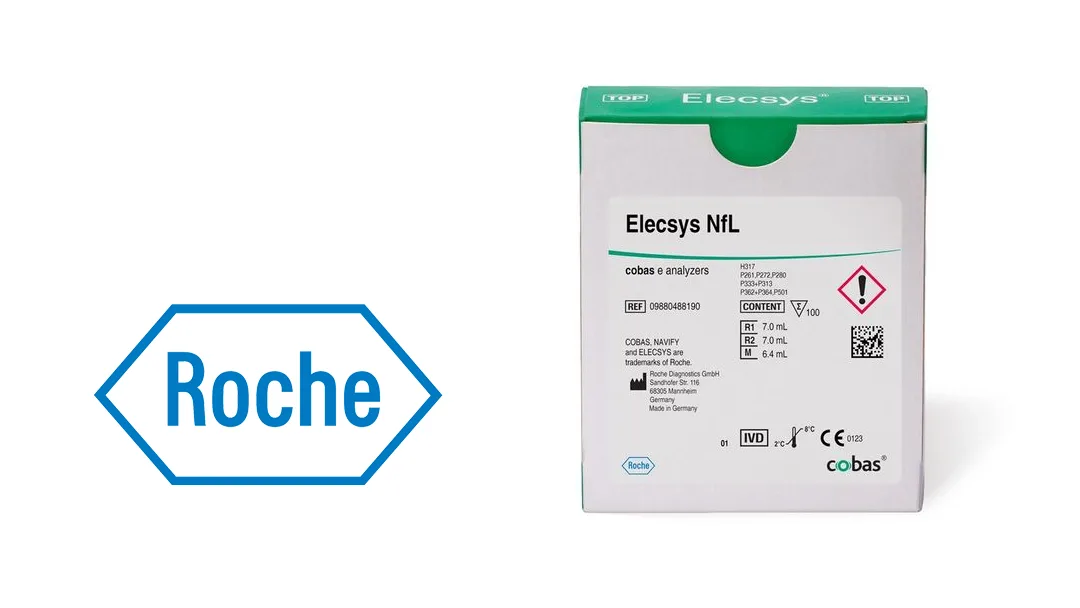
Roche AG (SWX: ROG, OTCMKTS: RHHBY) announced on 13 April 2026 that its Elecsys Neurofilament Light Chain (NfL) test has received CE mark approval for the detection of neuroinflammation in patients diagnosed with relapsing remitting multiple sclerosis (RRMS). The blood-based assay measures NfL, an abundant cytoskeletal protein found almost exclusively in neurons and recognized as a sensitive indicator of neuroaxonal damage.
Regulatory Milestone
| Parameter | Details |
|---|---|
| Company | Roche AG (SWX: ROG, OTCMKTS: RHHBY) |
| Test | Elecsys Neurofilament Light Chain (NfL) assay |
| Regulatory Approval | CE mark granted |
| Indication | Detection of neuroinflammation in relapsing remitting multiple sclerosis (RRMS) |
| Sample Type | Blood (serum or plasma) |
| Announcement Date | 13 April 2026 |
| Technology Platform | Elecsys immunoassay system |
Technology Profile & Clinical Utility
- Biomarker: Neurofilament Light Chain (NfL) – structural protein released during neuronal damage
- Specificity: Found almost exclusively in neurons, making it highly specific for neuroaxonal injury
- Sensitivity: Detects subtle changes in neuroinflammation before clinical symptoms manifest
- Sample Collection: Simple blood draw versus invasive cerebrospinal fluid collection
- Clinical Application: Provides objective measure of biological disease activity in MS patients
- Monitoring Capability: Enables longitudinal tracking of treatment response and disease progression
Strategic Implications
Diagnostic Innovation
- Paradigm Shift: Moves MS monitoring from purely clinical assessment to objective biomarker-driven approach
- Minimally Invasive: Eliminates need for lumbar puncture in routine monitoring scenarios
- Accessibility: Blood testing enables broader implementation across community and specialty care settings
- Standardization: Automated Elecsys platform ensures consistent results across laboratories
Market Positioning
- First-Mover Advantage: Among the first CE-marked blood-based NfL tests for MS monitoring
- Roche Ecosystem Integration: Complements Roche’s existing MS therapeutic portfolio including Ocrevus
- Laboratory Network: Leverages Roche’s extensive global diagnostic infrastructure for rapid adoption
- Reimbursement Pathway: CE mark facilitates European market access and payer coverage negotiations
Clinical Impact
Patient Benefits
- Reduced Burden: Eliminates painful and anxiety-inducing lumbar punctures for routine monitoring
- Frequent Monitoring: Enables more regular assessment of disease activity and treatment response
- Early Intervention: Facilitates timely treatment adjustments before irreversible damage occurs
- Personalized Care: Supports individualized treatment decisions based on objective biomarker data
Healthcare System Advantages
- Cost Efficiency: Reduces need for expensive MRI scans and invasive procedures
- Workflow Integration: Seamless incorporation into existing MS clinic protocols
- Resource Optimization: Frees up neurology and radiology resources for complex cases
- Outcome Improvement: Potential to improve long-term disability outcomes through proactive management
Competitive Landscape
- Biomarker Validation: NfL has emerged as the leading blood-based biomarker for neurodegenerative diseases
- Technology Differentiation: Roche’s automated platform offers advantages over manual or research-use-only assays
- Therapeutic Synergy: Unique position as both MS therapy provider and diagnostic innovator
- Global Expansion: CE mark serves as foundation for regulatory submissions in other markets including US FDA
Next Steps
Roche will now focus on commercial launch across European markets, healthcare professional education, and integration into clinical guidelines. The company is also pursuing additional indications for the NfL test in other neurodegenerative conditions.
Forward‑Looking Statements
This brief contains forward-looking statements regarding regulatory approvals, market opportunities, and commercial expectations for the Elecsys NfL test. Actual results may differ due to risks including market adoption rates, competitive developments, reimbursement decisions, and regulatory requirements.-Fineline Info & Tech