


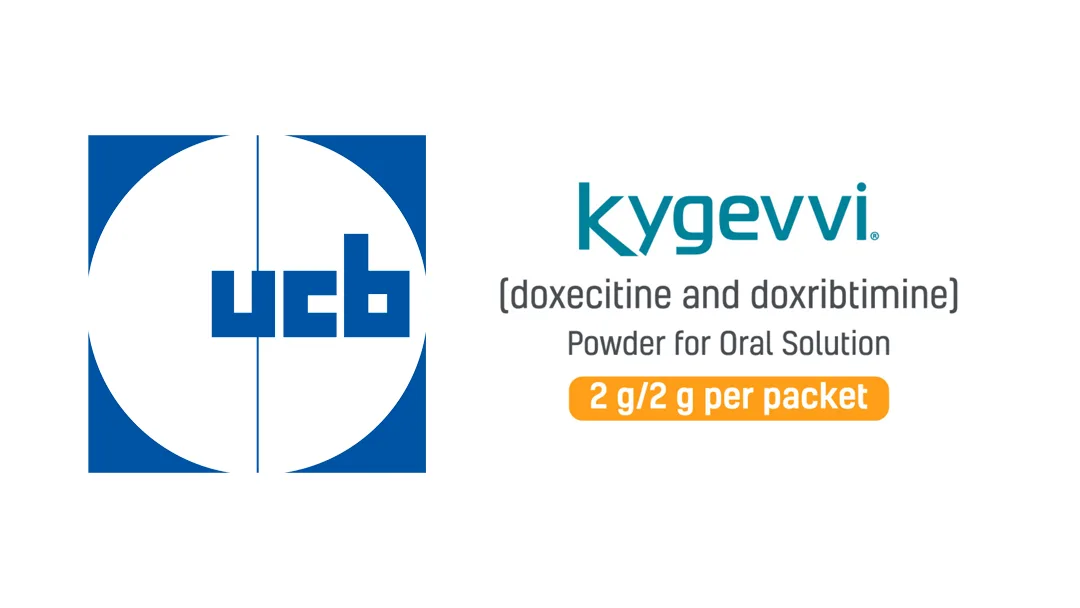
UCB (EBR: UCB) announced that the European Commission (EC) has granted marketing approval under exceptional circumstances for Kygevvi (doxecitine, doxribtimine), establishing it as the first and only approved treatment for thymidine kinase 2 deficiency (TK2d), an ultra-rare, life-threatening mitochondrial disorder.
Regulatory Milestone
| Item | Detail |
|---|---|
| Company | UCB (EBR: UCB) |
| Regulatory Authority | European Commission (EC) |
| Approval Type | Marketing authorization under exceptional circumstances |
| Product | Kygevvi (doxecitine, doxribtimine) |
| Indication | Genetically confirmed TK2d in children and adults with symptom onset ≤12 years of age |
| Previous Approval | FDA approval in US (November 2025) |
| Therapeutic Significance | First-ever approved treatment for TK2d |
Disease Profile – Thymidine Kinase 2 Deficiency (TK2d)
TK2d represents one of the most severe ultra-rare genetic disorders:
- Classification: Mitochondrial DNA depletion syndrome
- Pathology: Progressive, severe muscle weakness (myopathy) due to mitochondrial dysfunction
- Prognosis: Historically fatal, with high mortality risk within approximately three years of symptom onset for patients with early-onset disease (≤12 years)
- Previous Standard of Care: Limited to symptomatic supportive care with no disease-modifying treatments available
- Patient Population: Ultra-rare orphan disease affecting minimal patient numbers globally
Mechanism of Action
Kygevvi addresses the fundamental biochemical defect in TK2d through a novel nucleoside replacement strategy:
- Primary Action: Integrates pyrimidine nucleosides deoxycytidine (dC) and deoxythymidine (dT) into skeletal muscle mitochondrial DNA
- Biological Effect: Restores mitochondrial DNA copy number and improves skeletal muscle function
- Therapeutic Rationale: Bypasses the defective thymidine kinase 2 enzyme to provide essential building blocks for mitochondrial DNA synthesis
Clinical Evidence
The EU approval was supported by pooled data analyses from two clinical studies evaluating multiple functional outcome measures:
| Outcome Measure | Kygevvi Effect |
|---|---|
| Motor Milestones | Improved loss of motor development milestones |
| Respiratory Support | Reduced need for respiratory assistance |
| Feeding Support | Decreased requirement for feeding support |
| Survival | Positive impact on survival outcomes |
The comprehensive dataset demonstrated meaningful clinical benefits across critical domains of disease progression.
Market Access & Commercial Implications
- Orphan Drug Status: Benefits from EU orphan drug incentives including market exclusivity and regulatory fee reductions
- Pricing Premium: Ultra-rare disease therapies typically command high per-patient pricing reflecting development costs and small patient populations
- Reimbursement Strategy: Will require specialized access programs and health technology assessment negotiations across EU member states
- Global Expansion: EU approval complements existing US approval, creating foundation for worldwide commercial rollout
Strategic Significance
This approval represents a major milestone for UCB’s rare disease portfolio and demonstrates the company’s commitment to addressing unmet needs in ultra-orphan indications. The successful development of Kygevvi validates UCB’s expertise in mitochondrial disorders and complex genetic diseases.
For patients and families affected by TK2d, Kygevvi offers the first hope for disease modification rather than purely palliative care, potentially transforming the natural history of this devastating condition.
Industry Outlook
The approval under exceptional circumstances reflects the EU’s recognition of both the urgent medical need and the practical challenges of conducting large-scale trials in ultra-rare diseases. This regulatory pathway enables timely access to promising therapies while requiring post-approval evidence generation.
Kygevvi’s success may encourage further investment in mitochondrial disorder therapeutics and nucleoside replacement strategies for other genetic metabolic conditions.
Forward-Looking Statements
This brief contains forward-looking statements regarding regulatory approvals, commercial performance, and market access for Kygevvi. Actual results may differ due to risks including reimbursement negotiations, competitive developments, post-marketing surveillance requirements, and evolving regulatory standards for ultra-rare disease therapies in Europe.-Fineline Info & Tech