


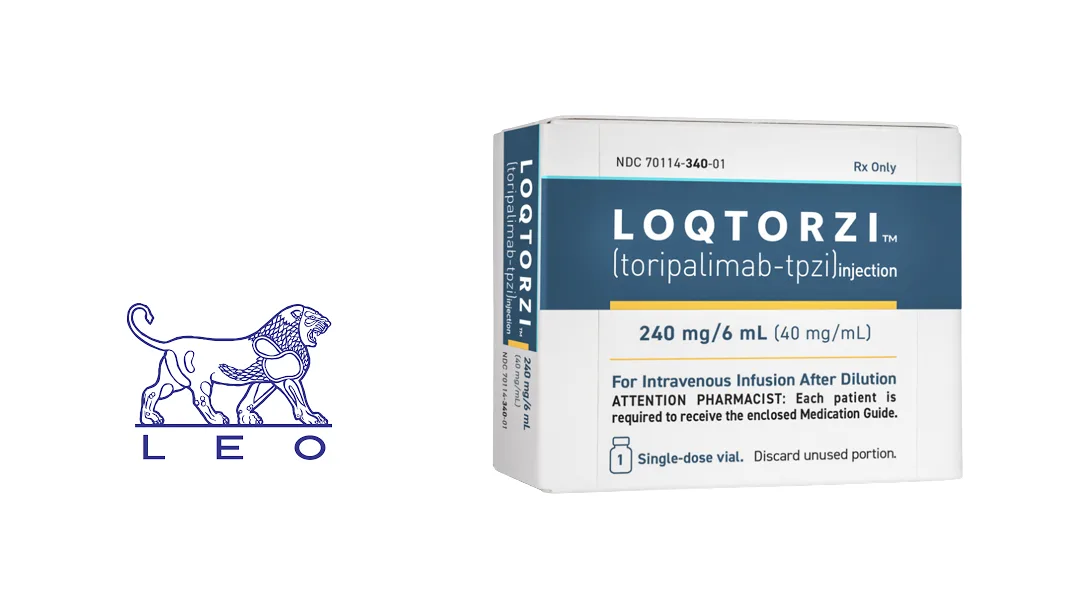
Er-Kim announced on April 14, 2026, that it has signed an exclusive commercialization agreement with LEO Pharma A/S to market LOQTORZI (toripalimab), an anti-PD-1 monoclonal antibody, across 11 Central and Eastern European (CEE) markets, marking a significant expansion of the immunotherapy’s European footprint.
Commercial Partnership Overview
| Item | Detail |
|---|---|
| Commercial Partner | Er-Kim |
| Licensing Partner | LEO Pharma A/S |
| Product | LOQTORZI (toripalimab) – anti-PD-1 monoclonal antibody |
| Territory | Bulgaria, Croatia, Czechia, Estonia, Hungary, Latvia, Lithuania, Poland, Romania, Slovakia, Slovenia |
| Agreement Type | Exclusive commercialization rights |
| Announcement Date | April 14, 2026 |
Product & Development Background
LOQTORZI (toripalimab) was developed by Shanghai Junshi Biosciences Co., Ltd. (1877.HK/688180.SH), a leading Chinese biopharmaceutical company specializing in innovative oncology therapeutics.
- Molecular Class: Anti-PD-1 monoclonal antibody
- Originator: Shanghai Junshi Biosciences Co., Ltd.
- Marketing Authorization Holder (MAH): TopAlliance Biosciences (wholly-owned Junshi subsidiary)
- European Rights: LEO Pharma holds exclusive distribution and sales rights for EU, EEA, Switzerland, and UK (granted 2025)
Strategic Market Expansion
The CEE partnership represents a strategic sub-licensing arrangement that extends LOQTORZI’s European commercial reach beyond LEO Pharma’s core territories:
- Market Access: Covers 11 CEE countries representing approximately 120 million population
- Healthcare Infrastructure: Diverse regulatory and reimbursement landscapes requiring specialized commercial expertise
- Oncology Need: Significant unmet need for advanced immunotherapies in CEE oncology markets
- Commercial Model: Er-Kim brings local market knowledge and established oncology commercial infrastructure
Competitive Landscape Analysis
The anti-PD-1 market in Central and Eastern Europe presents unique opportunities and challenges:
- Market Penetration: Lower adoption rates of checkpoint inhibitors compared to Western Europe
- Pricing Dynamics: More price-sensitive markets requiring value-based pricing strategies
- Competitive Set: Established players include Keytruda (pembrolizumab), Opdivo (nivolumab), and Tecentriq (atezolizumab)
- Differentiation: LOQTORZI’s clinical data package and potential cost advantages may support market entry
Strategic Implications
For Er-Kim
- Portfolio Enhancement: Adds premium immuno-oncology asset to existing commercial portfolio
- Geographic Expansion: Strengthens presence across diverse CEE healthcare systems
- Revenue Opportunity: High-value oncology product with multiple indication potential
For LEO Pharma
- Operational Efficiency: Leverages specialized partner for complex CEE markets while focusing on core territories
- Risk Mitigation: Reduces commercial investment requirements in lower-margin markets
- Revenue Stream: Royalty income without direct operational burden
For Junshi Biosciences
- Global Validation: Continued international partnerships validate LOQTORZI’s global competitiveness
- Revenue Diversification: Multiple licensing partners reduce dependency on single markets
- Strategic Flexibility: Maintains MAH status while enabling broad commercial access
Industry Outlook
This transaction reflects the evolving global oncology commercialization model, where originator companies increasingly rely on regional specialists to navigate complex local market dynamics. The CEE region represents a strategic growth frontier for immuno-oncology therapies, with improving healthcare infrastructure and increasing adoption of advanced cancer treatments.
Er-Kim’s specialized focus on CEE markets positions the company to effectively execute LOQTORZI’s commercial launch, potentially establishing a template for future partnerships in emerging European markets.
Forward-Looking Statements
This brief contains forward-looking statements regarding commercial partnerships, market expansion, and revenue opportunities for LOQTORZI in Central and Eastern Europe. Actual results may differ due to risks including regulatory approvals, reimbursement negotiations, competitive dynamics, and market adoption rates in diverse CEE healthcare systems.-Fineline Info & Tech