


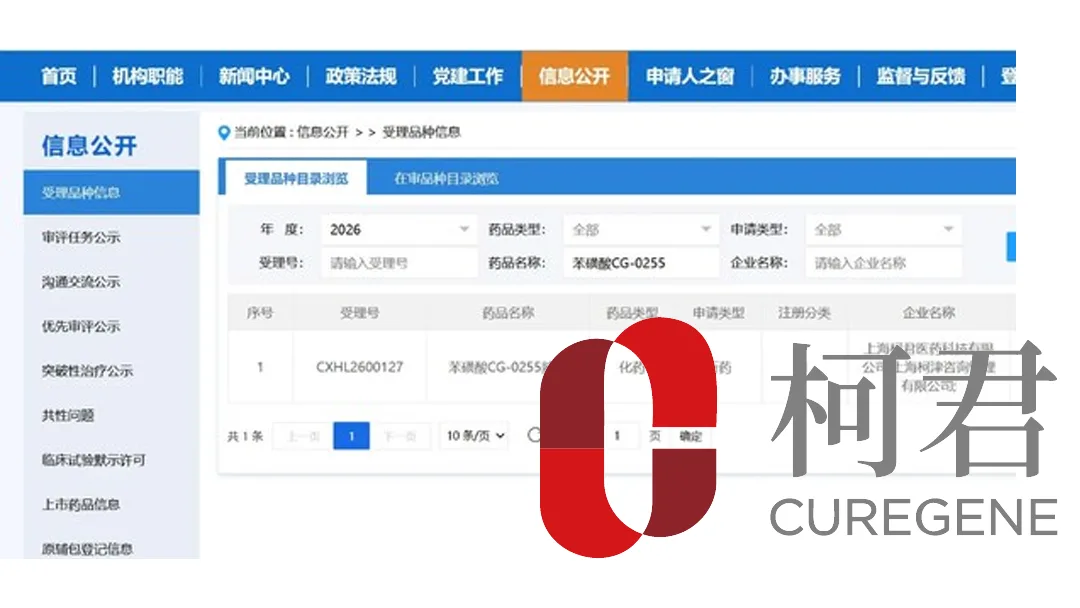
Shanghai CureGene Pharmaceutical Co., Ltd. announced that China’s National Medical Products Administration (NMPA) has granted approval to initiate clinical studies evaluating CG-0255, a Category 1 innovative drug, for the treatment of ischemic stroke. The investigational therapy represents the world’s first P2Y12 receptor inhibitor based on a thiol-based prodrug design, available in both intravenous and oral formulations.
Regulatory Milestone
| Item | Detail |
|---|---|
| Agency | NMPA (China) |
| Approval Type | Clinical trial authorization (Category 1 innovative drug) |
| Product | CG-0255 (P2Y12 receptor inhibitor, thiol-based prodrug) |
| Indication | Ischemic stroke |
| Approval Date | 18 May 2026 |
| Next Steps | Phase I/II clinical trials to assess safety, efficacy, and optimal dosing |
Drug Profile & Mechanism of Action
- Molecule: Next-generation antiplatelet agent with thiol-based prodrug design
- Target: P2Y12 receptor (key mediator of platelet aggregation)
- Innovation: Single-step hydrolysis directly releases active metabolite, bypassing CYP2C19 metabolic pathway
- Formulations: Dual availability – intravenous (acute setting) and oral (maintenance therapy)
- Therapeutic Rationale: Addresses “clopidogrel resistance” affecting 30-50% of Asian populations due to CYP2C19 enzyme deficiency
Clinical Advantages Over Existing Therapies
Current P2Y12 inhibitors like clopidogrel require complex metabolic activation through the CYP2C19 enzyme pathway, leading to significant inter-patient variability and treatment failure in enzyme-deficient individuals.
CG-0255 offers distinct advantages:
- Rapid onset of action – critical for acute ischemic stroke management
- Strong antiplatelet efficacy – consistent platelet inhibition regardless of genetic metabolic profile
- Low inter-patient variability – predictable pharmacokinetics across diverse patient populations
- Minimal drug-drug interactions – reduced risk of adverse interactions with commonly co-administered medications
- Dual formulation flexibility – seamless transition from IV to oral therapy during hospital-to-home care continuum
Market Opportunity & Unmet Need
Ischemic stroke represents 70-80% of all stroke cases in China, affecting approximately 2.5 million people annually. Antiplatelet therapy is a cornerstone of both acute treatment and secondary prevention, but current options are limited by metabolic variability and delayed onset.
The Chinese market dynamics favor CG-0255 adoption:
- High prevalence of CYP2C19 loss-of-function alleles in Asian populations (up to 50%)
- Growing burden of cardiovascular disease and stroke in aging population
- Increasing demand for precision medicine approaches in cerebrovascular care
- Limited availability of rapid-onset, reliable antiplatelet options for acute stroke settings
Strategic Implications
- First-Mover Advantage: World’s first thiol-based P2Y12 inhibitor positions CureGene at the forefront of next-generation antiplatelet development
- Global Potential: Success in China could support international regulatory filings, particularly in other Asian markets with similar genetic profiles
- Platform Technology: Thiol-based prodrug design may be applicable to other therapeutic areas requiring reliable metabolic activation
- Competitive Differentiation: Addresses fundamental limitations of existing P2Y12 inhibitors that have persisted for over two decades
Forward‑Looking Statements
This brief contains forward-looking statements regarding regulatory approvals, clinical development plans, and therapeutic potential for CG-0255. Actual results may differ due to risks including clinical trial outcomes, regulatory decisions, and competitive dynamics.-Fineline Info & Tech