


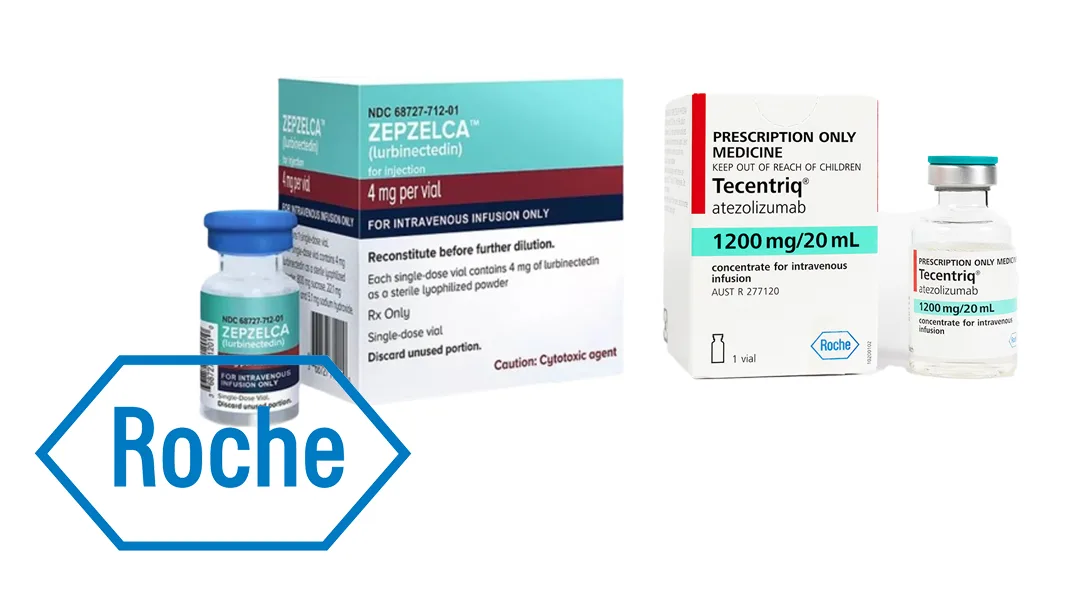
Roche AG (SWX: ROP, OTCMKTS: RHHBY) announced that the U.S. Food and Drug Administration (FDA) has approved Tecentriq (atezolizumab) and Tecentriq Hybreza (atezolizumab and hyaluronidase-tqjs) as adjuvant treatment for adult patients with muscle-invasive bladder cancer (MIBC) who have circulating tumor DNA molecular residual disease (ctDNA MRD) following cystectomy, as detected by Natera’s Signatera CDx personalized MRD assay.
Regulatory Milestone
| Item | Detail |
|---|---|
| Agency | FDA (United States) |
| Approval Type | Full marketing authorization with companion diagnostic |
| Products | Tecentriq (IV) and Tecentriq Hybreza (subcutaneous) |
| Indication | Adjuvant treatment of MIBC with ctDNA MRD post-cystectomy |
| Approval Date | 15 May 2026 |
| Companion Diagnostic | Natera Signatera CDx personalized MRD assay |
Product Profile & Innovation
- Molecule: Atezolizumab – monoclonal antibody targeting PD-L1
- Formulations: Intravenous (Tecentriq) and subcutaneous (Tecentriq Hybreza)
- Innovation: First ctDNA-guided adjuvant immunotherapy approval in bladder cancer
- Therapeutic Paradigm: Precision medicine approach using molecular residual disease detection to identify high-risk patients most likely to benefit from adjuvant therapy
Clinical Evidence – IMvigor011 Phase 3 Trial
The approval was based on the Phase 3 IMvigor011 study, which demonstrated unprecedented survival benefits in the ctDNA MRD-positive population:
| Endpoint | Result (Tecentriq) | Benefit vs. Placebo |
|---|---|---|
| Disease-Free Survival (DFS) | 36% risk reduction | HR 0.64 (95% CI: 0.47-0.87) |
| Overall Survival (OS) | 41% risk reduction | HR 0.59 (95% CI: 0.41-0.85) |
| Patient Population | ctDNA MRD-positive within 1 year post-cystectomy | Serial testing required for identification |
| Safety Profile | Consistent with previous Tecentriq studies | No new safety signals identified |
Market Context & Unmet Need
Muscle-invasive bladder cancer affects approximately 20,000-25,000 patients annually in the US, with 50-60% recurrence rate following radical cystectomy. Traditional adjuvant chemotherapy provides limited benefit and significant toxicity, while many patients receive no adjuvant therapy due to uncertain risk stratification.
The ctDNA-guided approach addresses critical gaps:
- Identifies high-risk patients most likely to benefit from adjuvant immunotherapy
- Spares low-risk patients from unnecessary treatment and associated toxicities
- Provides molecular-level monitoring capability through serial ctDNA testing
- Enables earlier intervention at molecular relapse before clinical manifestation
Commercial Implications
- Pricing Strategy: Premium pricing expected for both IV and subcutaneous formulations, reflecting survival benefit and precision medicine value
- Market Penetration: Initial focus on academic medical centers and comprehensive cancer centers with ctDNA testing capabilities
- Competitive Positioning: Establishes Tecentriq as the first and only FDA-approved adjuvant immunotherapy for ctDNA MRD-positive MIBC
- Diagnostic Partnership: Exclusive relationship with Natera creates integrated therapeutic-diagnostic ecosystem
Strategic Significance
- Precision Oncology Leadership: Reinforces Roche’s commitment to biomarker-driven cancer immunotherapy development
- ctDNA Validation: Represents one of the first regulatory approvals based on circulating tumor DNA as a predictive biomarker
- Subcutaneous Advantage: Tecentriq Hybreza offers improved patient convenience and reduced healthcare resource utilization versus IV administration
- Platform Potential: Success may support expansion to other tumor types using ctDNA MRD as a selection criterion
Forward‑Looking Statements
This brief contains forward-looking statements regarding regulatory approvals, clinical outcomes, and commercial performance for Tecentriq and Tecentriq Hybreza. Actual results may differ due to risks including market adoption rates, competitive dynamics, and reimbursement decisions.-Fineline Info & Tech