



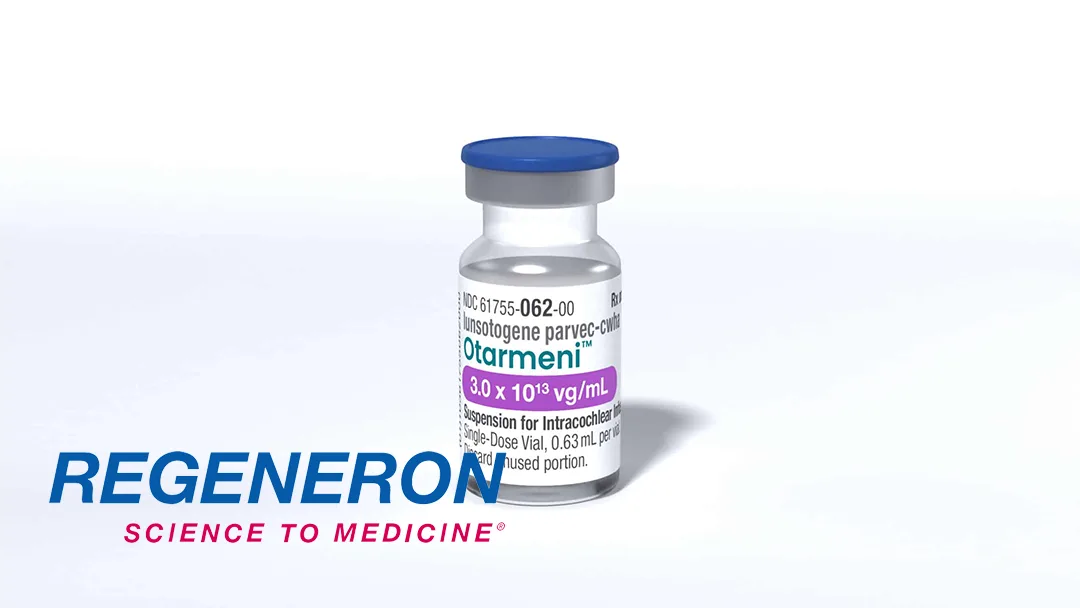
Regeneron Pharmaceuticals, Inc. (NASDAQ: REGN) announced that the European Medicines Agency (EMA) has accepted for accelerated review the Marketing Authorization Application (MAA) for Otarmeni (lunsotogene parvec), an adeno-associated virus (AAV) vector-based gene therapy designed to treat hearing loss caused by biallelic variants in the OTOF gene.
Regulatory Status & Development Milestone
| Parameter | Detail |
|---|---|
| Company | Regeneron Pharmaceuticals, Inc. (NASDAQ: REGN) |
| Drug Name | Otarmeni (lunsotogene parvec) |
| Regulatory Agency | European Medicines Agency (EMA) |
| Review Status | Accelerated review accepted |
| Application Type | Marketing Authorization Application (MAA) |
| Current Approval Status | Already approved in the United States |
| Designation | EMA Orphan Drug Designation previously granted |
Disease Background & Unmet Medical Need
OTOF-Related Hearing Loss Profile
- Disease Classification: Ultra-rare genetic disorder
- EU Incidence: Approximately 46 newborns per year across the European Union
- Pathophysiology: Biallelic variants in the OTOF gene lead to absence of functional otoferlin protein
- Anatomical Integrity: All ear structures remain intact; defect is purely at the molecular signaling level
- Functional Impact: Otoferlin protein is essential for signal transmission between inner ear sensory cells and the auditory nerve
Current Treatment Landscape
- Standard of Care: Hearing aids and cochlear implants (symptomatic management only)
- Therapeutic Gap: No disease-modifying treatments exist
- Clinical Urgency: Early intervention critical for speech and language development in affected infants
Gene Therapy Mechanism & Innovation
Molecular Approach
- Vector Platform: Adeno-associated virus (AAV) vector-based delivery system
- Therapeutic Strategy: Single-dose gene replacement therapy delivering functional OTOF gene
- Target Population: Patients with confirmed biallelic OTOF variants
- Potential Outcome: Restoration of otoferlin protein expression and auditory signal transmission
Clinical Significance
If approved, Otarmeni would become the first gene therapy for OTOF-related hearing loss in the European Union, representing a paradigm shift from symptomatic management to potential cure. The therapy addresses the root cause of the disease rather than compensating for hearing loss through external devices.
Market Implications & Commercial Strategy
Despite affecting only 46 newborns annually in the EU, OTOF-related hearing loss represents a high-value ultra-orphan indication due to:
- Transformative Clinical Benefit: Potential to restore natural hearing function
- Premium Pricing Potential: Gene therapies for ultra-rare diseases typically command seven-figure price tags
- Regulatory Incentives: Orphan drug designation provides market exclusivity and development support
- Precedent Setting: Success could pave the way for additional genetic hearing loss indications
Regeneron’s accelerated review acceptance reflects the EMA’s recognition of the substantial unmet medical need and the therapy’s potential to address a condition with no existing disease-modifying treatments.
The company’s established expertise in AAV-based gene therapies, combined with its successful US approval, positions Regeneron well to navigate the European regulatory pathway and establish commercial infrastructure for this specialized ultra-orphan product.
Broader Industry Impact
Otarmeni’s development represents a significant advancement in the field of genetic hearing loss therapeutics, demonstrating the feasibility of gene replacement approaches for sensory disorders. Success in this indication could catalyze investment in other genetic forms of hearing loss affecting larger patient populations.
The therapy also highlights the growing trend of ultra-orphan gene therapies targeting conditions with extremely small patient populations but offering transformative clinical benefits, supported by favorable regulatory frameworks and premium reimbursement models.
Forward-Looking Statements
This brief contains forward-looking statements regarding regulatory approvals, clinical development, and commercial expectations. Actual results may differ due to risks including final regulatory decisions, clinical trial outcomes, pricing negotiations, and market access challenges.-Fineline Info & Tech