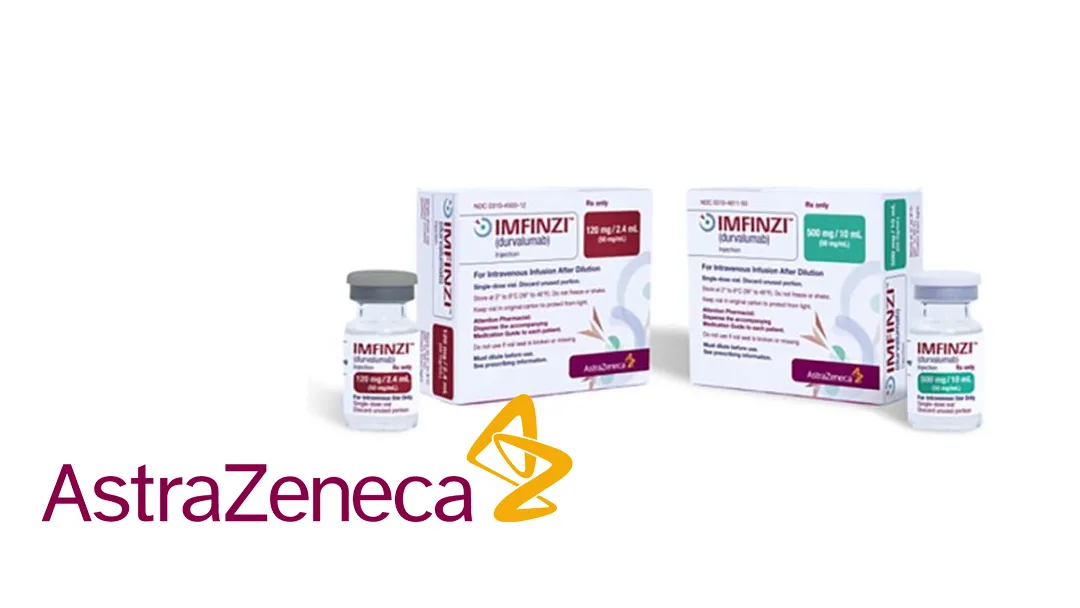
AstraZeneca PLC (NASDAQ: AZN) announced European Union marketing approval for Imfinzi (durvalumab) in combination with FLOT chemotherapy for resectable early‑stage and locally advanced gastric cancer and gastroesophageal junction (GEJ) cancer, expanding the PD‑L1 inhibitor’s perioperative oncology portfolio with demonstrated survival benefits across all PD‑L1 expression levels.
Resectable early‑stage and locally advanced gastric/GEJ cancer (Stage II, III, IVA)
Patient Population
Adult patients
Global Status
Approved US, EU; under review Japan and other markets
Clinical Evidence – MATTERHORN Phase III
Endpoint
Imfinzi + FLOT
FLOT Alone
Clinical Benefit
Event‑Free Survival (EFS) Risk Reduction
–
–
29% reduction in progression/recurrence/death risk
Median EFS
Not reached
32.8 months
Durability signal
12‑Month EFS Rate
78.2%
74.0%
+4.2 percentage points
24‑Month EFS Rate
67.4%
58.5%
+8.9 percentage points
Overall Survival Risk Reduction
–
–
22% reduction in death risk
3‑Year Survival Rate
69%
62%
+7 percentage points
PD‑L1 Status
Benefit observed
–
Independent of PD‑L1 expression
Survival Curve Dynamics: Progressive separation at each prespecified OS time point indicates magnitude of benefit increases over time
Biomarker Agnostic: OS benefit demonstrated regardless of tumor PD‑L1 expression status – broad patient population applicability
Strategic & Commercial Context
Dimension
Imfinzi Position
Market Implication
Perioperative Paradigm
First PD‑L1 inhibitor approved for perioperative gastric/GEJ cancer in EU
Establishes standard‑of‑care position in curative‑intent setting vs. adjuvant/post‑surgical competitors
FLOT Combination
Integrated with established neoadjuvant chemotherapy backbone
Leverages existing surgical oncology workflows; no regimen disruption
Geographic Expansion
EU approval follows US nod; Japan/other markets pending
Global perioperative gastric cancer franchise build‑out
Competitive Differentiation
22% OS benefit vs. chemotherapy alone; PD‑L1 agnostic efficacy
Differentiates from nivolumab‑based regimens with biomarker‑restricted labels
Market Impact & Outlook
Gastric Cancer Market Dynamics: Gastric cancer represents fifth most common cancer globally (~1 million new cases annually); resectable Stage II‑IVA population in EU/US/Japan totals ~150,000 patients/year with limited perioperative immunotherapy options prior to Imfinzi approval.
MATTERHORN Clinical Impact: 29% EFS risk reduction and 22% OS mortality benefit in curative‑intent setting positions Imfinzi as potential new standard; “perioperative” (pre‑+ post‑surgical) approach captures patient population earlier than adjuvant‑only competitors.
AstraZeneca Oncology Portfolio Synergies: Imfinzi gastric approval complements existing indications (Stage III NSCLC, extensive‑stage SCLC, biliary tract cancer); perioperative strategy aligns with Enhertu (trastuzumab deruxtecan) in HER2+ gastric cancer for comprehensive gastric/GEJ franchise coverage.
Revenue Trajectory: Perioperative gastric cancer indication adds estimated US$400‑600 million annual peak sales potential (2028‑2030) assuming 25‑30% market share in addressable EU/US populations; Japan approval (expected H2 2026) adds further upside.
Regulatory Momentum: EU approval validates MATTERHORN data package for additional market submissions; China NMPA submission anticipated 2026‑2027 given gastric cancer incidence priority and AstraZeneca’s established China oncology infrastructure.
Forward‑Looking Statements This brief contains forward‑looking statements regarding commercialization expectations, market penetration projections, and regulatory expansion timelines for Imfinzi in gastric cancer. Actual results may differ due to risks including competitive dynamics, reimbursement negotiations, and physician adoption rates in perioperative oncology.-Fineline Info & Tech