


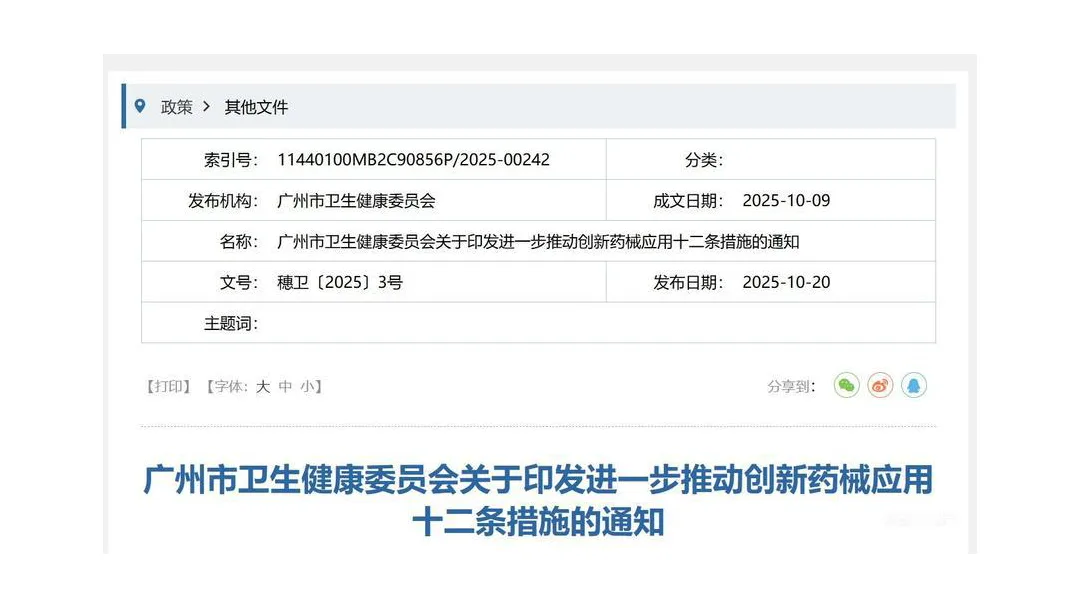
The Guangzhou Municipal Health Commission issued a comprehensive notice detailing twelve strategic measures aimed at streamlining the entry of innovative drugs and medical devices into hospitals, boosting clinical uptake, and refining the development ecosystem. The initiative covers procurement, clinical review, performance metrics, and research collaboration.
1. Strengthening Drug Procurement and Access
- Dual‑Channel Pharmacy System: Medical institutions must increase procurement of National Healthcare Security Administration (NHSA)‑negotiated drugs. Where a product is not yet on the hospital formulary, a dual‑channel pharmacy mechanism ensures prescriptions are issued “as much as possible.”
2. Enhancing Hospital Review and Adoption
- Early PTC/Device Committee Meetings: A Pharmacy & Therapeutics Committee (PTC) or equivalent device committee must convene within one month of releasing the Guangzhou Innovative Drugs & Medical Devices Catalog.
- Minimum Annual Working Sessions: No fewer than four such committees’ working meetings are required per year, providing a structured path for clinical evaluation.
3. Removing Usage Restrictions
- License‑Free Stocking: Restrictions on the total number of drug varieties stocked by medical institutions are lifted.
- Specification Relaxation: NHSA‑negotiated drugs are exempt from the “one product, two specifications” limitation.
4. Excluding Innovation‑Related Expenses from Performance Metrics
- Performance‑Monitoring Exclusion: Costs related to innovative drugs and devices will not be reflected in public‑institution performance indicators such as average outpatient cost per visit or average inpatient drug cost.
- Usage Limits Repealed: Institutions cannot curtail innovative products based on formulary size, drug‑to‑revenue ratio, consumable expenditure ratio, or monthly drug usage ceilings.
5. Promoting Collaborative Research & Development
- “1 + N + X” Regional Clinical‑Trial Alliance: Guangzhou will launch a regional alliance system with a focus on key specialties (oncology, respiratory diseases) to create a “1 + N + X” partnership model.
- Priority Support for Local Innovators: Firms developing innovative drugs and devices receive preferential support to join the alliance infrastructure.
6. Integrating Innovation into Performance Evaluation
- Performance‑Evaluation Re‑engineering: The commission will pilot the integration of the reasonable use of innovative products, cost‑control effectiveness, and patient‑benefit assessments into hospital and department performance evaluation frameworks.
How the Measures Translate into On‑Ground Change
- Reduced Administrative Burden: Dual‑channel procurement eliminates bottlenecks, allowing physicians to prescribe breakthrough therapies without waiting for formulary approval.
- Faster Clinical Adoption: Monthly committee meetings create a continuous dialogue between clinicians, pharmacists, and device specialists, accelerating evidence‑based uptake.
- Rewarding Innovation: By removing innovative products from cost‑based performance metrics, hospitals no longer face financial penalties for adopting new therapies, encouraging risk‑taking in patient care.
- Fostering Early‑Stage Development: The “1 + N + X” alliance system positions Guangzhou as a regional hub for pivotal oncology and respiratory clinical trials, attracting both domestic and foreign innovators.-Fineline Info & Tech